
Choosing the right Audio Intercom System For Apartments means looking beyond a sleek wall panel. Residents need clear conversations, dependable entry control, and a setup that fits the building’s daily routines. A visitor speaking from a windy entrance should still be understandable inside a third-floor unit. Small details matter. So does consistency.
This guide examines the features that shape real-world performance, including speaker clarity, microphone quality, background-noise handling, and ease of use. It also considers installation requirements, maintenance, power backup, and whether the system suits an existing building or a new development. A product can sound impressive in a demonstration yet disappoint in a busy lobby. That gap deserves attention.
Apartment managers and owners should compare systems against their building’s layout, resident needs, and budget—not just a feature list. Ask how calls are routed, what happens during an outage, and how easily staff can troubleshoot common problems. Check manufacturer specifications and support information, then confirm important details with a qualified installer. No single option is right for every property. Even a well-reviewed system may be awkward for residents with hearing or mobility needs. The recommendations ahead are intended to make comparison more practical, while recognizing that site conditions and resident feedback can change the final choice. A careful decision starts with the everyday experience at the entrance.
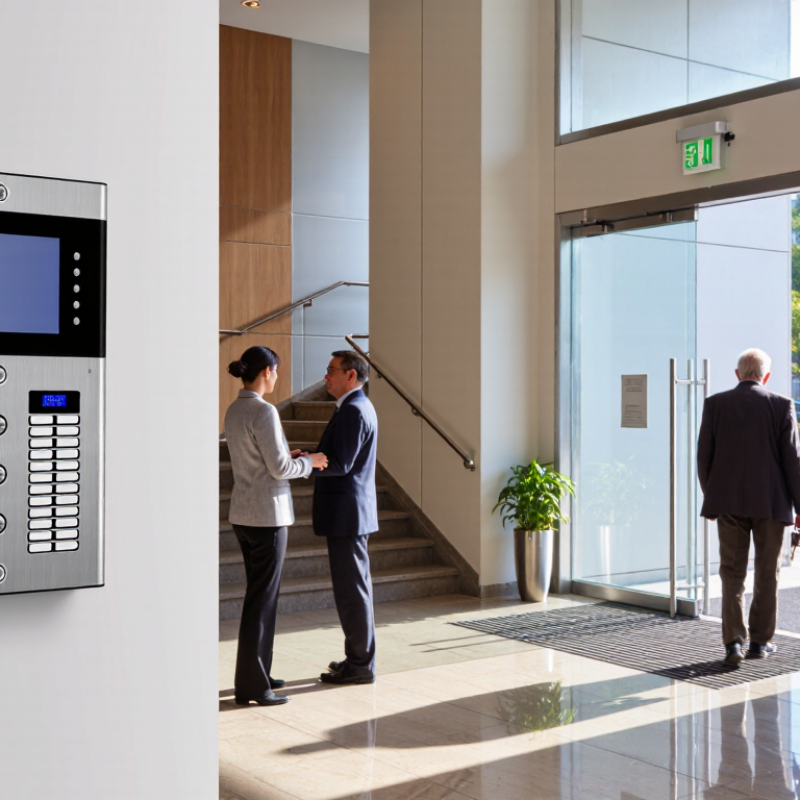
An audio intercom connects a building’s entrance to apartments or a staffed reception area. A visitor presses a unit number, and the resident hears a call through a wall handset or compatible indoor device. They can speak without walking down to the lobby. If the entrance supports remote release, the resident can unlock the door after deciding who is there. The system carries voices; it does not identify visitors or guarantee that an entrance is secure.
In daily use, clear sound matters more than a long feature list. A delivery driver speaking beside a rattling entrance door may be hard to understand, especially when a resident’s handset sits near a television. Good installation, sensible speaker placement, and regular checks can reduce these problems. Test calls from different floors. Listen for echo and weak volume. Small details count. Buildings should also consider residents who may have difficulty hearing or speaking, and offer practical alternatives where possible. An audio intercom can make entry more convenient, but it depends on power, working equipment, and people using it thoughtfully. It is a useful layer, not a perfect solution. Sometimes, a simple system still needs better maintenance.
A long corridor changes what residents need from an audio intercom. A clear call from the lobby may still be hard to hear behind a closed apartment door. In a compact, single-entry building, a simple indoor handset can be practical. Larger properties may need reliable audio at several entrances, plus a directory that visitors can use without guesswork. Walk the route from sidewalk to unit before choosing equipment. Note echoing stairwells, distant gates, and spots where staff cannot hear a call.
Access habits matter, too. Pew Research Center’s 2024 report, “Mobile Fact Sheet,” found that 91% of U.S. adults own a smartphone. That supports offering mobile answering, but it does not mean every resident wants an app or has dependable phone access. Keep a straightforward in-unit option where possible. Consider delivery traffic, visiting caregivers, and residents who cannot easily reach a wall-mounted panel. One assumption worth challenging: the newest interface is not always the easiest one to use. Small detail. It matters.
Tips: Test calls from the farthest entrance and a closed apartment door. Ask residents to try both the handset and mobile route. Record dead spots; building materials and layout can make coverage uneven. No floor plan is perfect, and real-world testing may expose surprises.
Apartment intercoms should make speech clear before they add clever features. A tenant needs to hear a visitor over hallway noise, then release the correct door without repeating instructions. Look for adjustable call volume, strong echo control, and simple, tactile controls. Clear speech matters. The World Health Organization’s 2021 World Report on Hearing estimates that over 1.5 billion people live with hearing loss. That makes adjustable volume and visible call indicators practical features, not extras. Test the unit from a real apartment doorway; a quiet showroom can hide poor performance.
Network security and dependable operation deserve equal attention. Verizon’s 2024 Data Breach Investigations Report found that the human element was involved in 68% of breaches. For an intercom, that supports unique resident credentials, limited administrator access, and clear procedures for removing former tenants. Ask whether the system keeps working during an internet outage, and whether building staff can update access without resetting every unit. I would not choose a system by app features alone. A call that arrives late, or a button residents cannot understand, quickly becomes a daily annoyance. Even a good installation needs occasional review as residents and building routines change.
| Feature | Priority | Why It Matters in an Apartment | What to Check Before Buying | Practical Evaluation |
|---|---|---|---|---|
| Clear, full-duplex audio | Essential | Residents and visitors should be able to speak and hear naturally, without repeatedly taking turns or missing words. | Test both ends of the call in a noisy lobby. Ask whether the system supports hands-free, two-way conversation and how it handles echo and background noise. | Prefer intelligible speech at normal speaking volume over a long list of audio specifications. |
| Reliable door release | Essential | Audio entry is useful only if an authorized resident can release the correct entrance door during a call. | Confirm compatibility with the existing electric lock, release relay, and door wiring. Test operation from every intended apartment station. | Have the installer verify the lock interface and fail-safe or fail-secure behavior for the building’s access requirements. |
| Wiring and retrofit compatibility | Essential | Existing buildings may have different cable types and layouts. Compatibility can affect installation cost, disruption, and whether old apartment stations can be reused. | Identify the current system’s wiring, power supply, number of apartments, and entrance-panel configuration before selecting equipment. | Request a site survey; do not assume that systems using a similar number of wires are interchangeable. |
| Apartment capacity and expansion | Essential | The system must serve the present number of apartments and any planned additions, such as a second entrance or another indoor station. | Check supported apartment stations, entrances, call buttons, and any capacity limits. Verify whether expansion needs additional power or controllers. | Choose capacity based on the building’s actual layout and reasonable future plans, not just its current unit count. |
| Power backup and recovery | Essential | A power interruption can affect calling and door release, particularly in shared entry areas. | Ask which components require backup power, what functions remain available during an outage, and how the system behaves when power returns. | Confirm backup arrangements with the installer and building manager; backup duration depends on the equipment and battery configuration. |
| Network and remote-service requirements | Useful | Network-connected systems may support administration or remote calling, but they can also depend on network quality and ongoing service availability. | Check whether an internet connection is required for basic calling and door release, what happens during an internet outage, and whether recurring fees apply. | For IP-based systems, review network security, software-update responsibility, and the building’s support plan. |
| Simple controls and accessible operation | Essential | Residents of different ages and abilities should be able to answer calls, adjust volume, and release the door without confusion. | Look for clearly marked controls, adjustable call volume, audible or visual call indication, and a usable interface for the intended residents. | Ask residents or building staff to try the controls before approving a large installation. |
| Privacy and call management | Useful | Apartment systems should route calls to the intended unit and limit access to configuration or resident information. | Check how apartment numbers are assigned, who can change settings, and whether network-connected features collect or retain call data. | Document administrator access and data-handling practices, especially for connected systems. |
| Serviceability and parts availability | Essential | A fault in a shared entrance can affect many residents. Clear diagnostics and available replacement parts can reduce downtime. | Ask about warranty terms, local technical support, replacement-part availability, and the process for diagnosing faults. | Compare the complete service plan, not only the initial equipment price. |
| Weather and site suitability | Useful | Entrance equipment may be exposed to rain, dust, temperature changes, or frequent use, depending on its location. | Check the specified environmental rating and installation requirements for the actual entrance conditions. | Use equipment rated for the installation environment and have outdoor units installed according to the manufacturer’s instructions. |
Choosing an apartment audio intercom starts with the building’s wiring, not a feature list. Wired systems suit new construction or buildings with usable cabling; they offer stable audio but can require disruptive installation. Wireless systems avoid long cable runs and often simplify retrofits. However, thick concrete walls, metal doors, and crowded radio channels can weaken signals. IP systems carry audio over a building network, allowing flexible expansion and remote management. They also depend on sound network configuration and ongoing cybersecurity maintenance.
Network capacity deserves attention. Cisco’s Annual Internet Report forecast 29.3 billion networked devices and connections worldwide by 2023, compared with 18.4 billion in 2018. This was a global forecast, not an apartment-intercom count, but it highlights growing network demands. For an IP installation, check bandwidth, Wi-Fi coverage, and who will manage software updates. A network diagram can reveal weak spots before installation. Still, diagrams rarely capture every concrete wall.
Tips: Test wireless audio at the actual entrance and inside several apartments. Ask installers to document cable routes, network requirements, backup power, and maintenance responsibilities. Compare total installation and upkeep costs, not just the device price. A modest wired system may be the better choice where reliability matters more than remote features.
Choosing an apartment audio intercom starts with the building, not the feature list. Check how many entrances need coverage, whether existing wiring is usable, and how far each indoor station sits from the entry panel. Ask residents whether clear speech, hands-free answering, or adjustable volume matters most. A loud lobby can make a quiet speaker nearly useless.
Compare sound clarity, simple controls, and compatibility with the building’s wiring and door-release equipment. For wireless models, check signal strength through the actual walls; concrete and metal can weaken reception. Think about maintenance, too. A system that is easy to explain may get used more consistently. Small details matter.
Before installation, confirm who is responsible for shared wiring and entry equipment. Avoid altering building systems without approval, and use a qualified technician for electrical work or uncertain connections. Mount the indoor unit near a common listening spot, away from televisions and kitchen noise. Test calls from every entrance, with doors closed and different voices speaking at normal volume. Test it aloud. If speech sounds muffled, adjust placement or settings before finishing. A tidy installation can still miss one awkward hallway corner, so check the real daily routine, not just the instruction sheet.
