What Are the Best Chillers for Home and Industrial Use?
Chillers play a crucial role in both home and industrial settings. They are essential for temperature control and comfort. According to a recent market research report, the global chillers market is projected to reach $12 billion by 2025. This growth highlights the increasing demand for efficient cooling solutions.
In households, chillers help maintain optimal temperatures, particularly during hot summer months. They enhance comfort and reduce energy costs. However, the choice of the best chiller can be overwhelming. Residential chillers come in various types and capacities. Each option presents its own advantages and drawbacks, requiring careful consideration.
In industrial applications, chillers are vital for processes such as food production and pharmaceuticals. The right chiller can improve efficiency and minimize waste. Nonetheless, companies often face challenges in selecting the appropriate system. Understanding specific needs is crucial. Thus, evaluating the best chillers is essential for both residential and industrial use.
Types of Chillers: Understanding the Basics for Home and Industrial Use
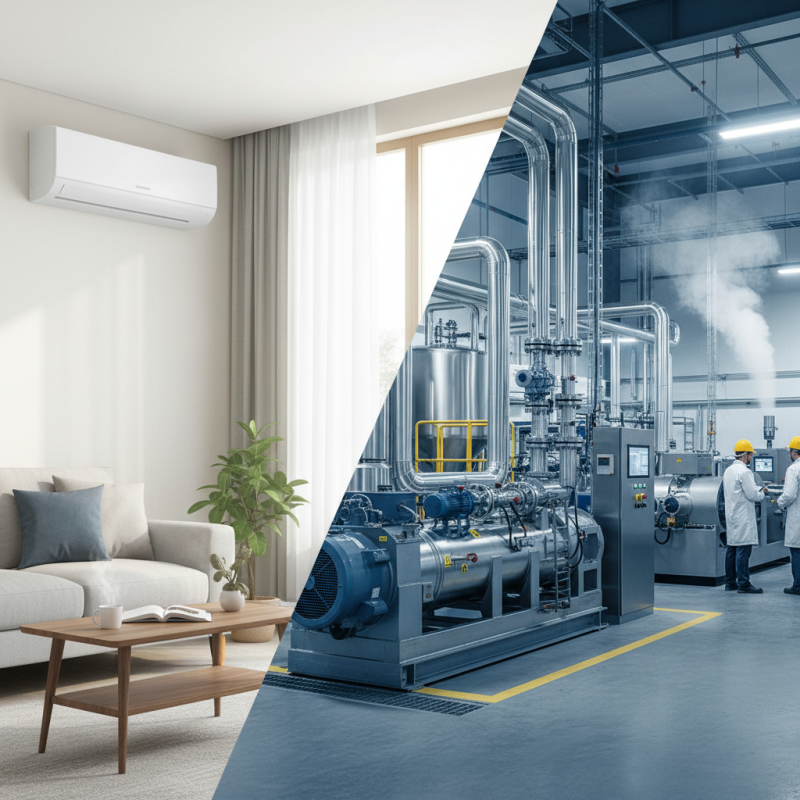
Chillers are essential for both home and industrial applications. They provide cooling by removing heat from a liquid via vapor-compression or absorption refrigeration cycles. Understanding the different types of chillers is key for optimizing energy efficiency and operational costs. According to industry reports, the global chiller market is projected to reach $12 billion by 2025, emphasizing their importance.
There are three main types of chillers: air-cooled, water-cooled, and evaporative chillers. Air-cooled chillers are common in residential settings due to their lower installation costs. They tend to consume more energy, though, especially in hotter climates. Water-cooled chillers are preferred in industrial environments, as they are more energy-efficient and better suited for heavy-duty applications.
Tip: Always consider the size and capacity of the chiller. Oversized systems lead to higher energy costs and reduced efficiency. Ensure that the unit matches your cooling requirements.
Evaporative chillers combine features of air-cooled and water-cooled chillers, suitable for various applications. They vastly reduce energy consumption, but their dependability needs careful monitoring. Despite their benefits, maintenance can be tricky.
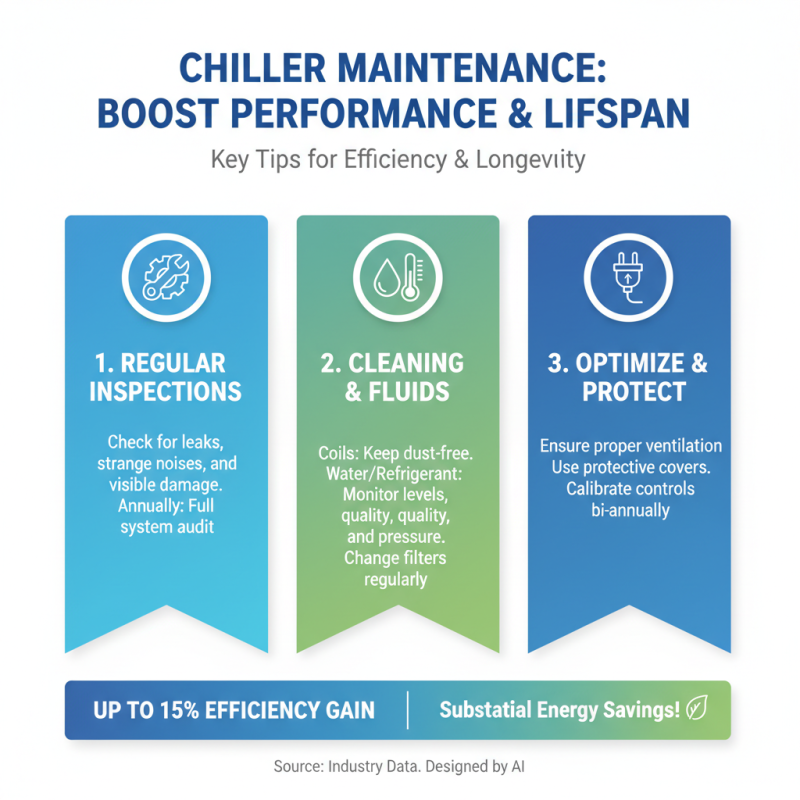
Tip: Regular maintenance is vital. Neglect can lead to costly downtime. Schedule routine checks to keep your chiller running smoothly.
Best Chillers for Home and Industrial Use
This chart displays the cooling capacities of different types of chillers commonly used for both home and industrial applications, showcasing their effectiveness in BTU/hr.
Key Features to Consider When Selecting a Chiller for Your Needs
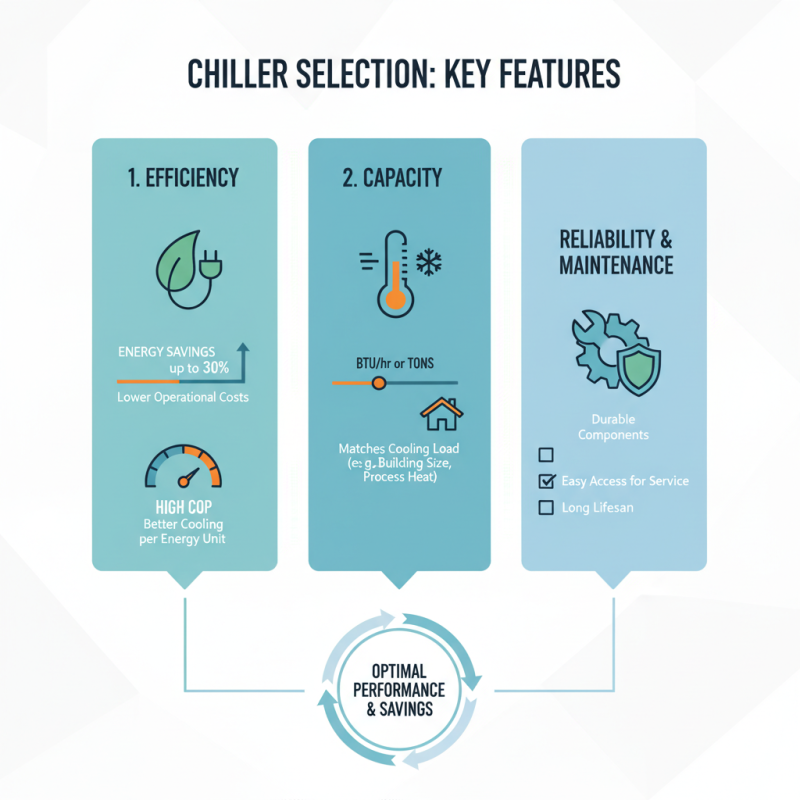
When choosing a chiller, several key features significantly impact performance. Efficiency ranks high on the list. Energy-efficient chillers can reduce operational costs by up to 30%, as reported by the Department of Energy. A unit with a high Coefficient of Performance (COP) ensures better cooling output for less energy input.
Cooling capacity is another critical aspect. Understanding the specific BTU (British Thermal Unit) requirement for both home and industrial use helps avoid over or under-sizing. Too large a chiller can lead to inefficiency and higher utility bills. Noise levels are often overlooked but affect comfort in residential settings. Quiet models are available for home use, decreasing disturbances, especially in living areas.
Additionally, maintenance requirements should not be ignored. Some chillers need frequent servicing, while others have lower maintenance needs. The longevity of a unit correlates with how well it is maintained. Many choose to compromise on features, leading to underperformance in real-world scenarios. This can result in unexpected costs down the line. Understanding these details ensures the right chiller selection for your facility or home.
Top Brands and Models of Chillers for Residential Applications
When it comes to chillers for residential applications, several models stand out. Most homeowners want a unit that is energy-efficient and reliable. Compact designs are often preferred for tighter spaces. They can fit into smaller backyards or balconies without compromising on performance.
Efficiency is vital. Some models excel in power usage while maintaining low operating costs. Homeowners appreciate the quiet operation of these units, especially in urban settings. Installation can be tricky. It's essential to hire a professional to ensure everything works safely.
Maintenance is another concern. Regular checks can prevent breakdowns. Filters should be cleaned often to ensure optimal performance. Users often overlook this aspect. A neglected chiller can lead to unexpected expenses and repairs. Balancing efficiency, size, and upkeep is key to finding the right model.
What Are the Best Chillers for Home and Industrial Use?
| Type of Chiller |
Cooling Capacity (BTU/h) |
Energy Efficiency Ratio (EER) |
Price Range ($) |
Features |
| Air-Cooled Chiller |
30,000 |
13.5 |
3000 - 5000 |
Compact design, Low maintenance |
| Water-Cooled Chiller |
50,000 |
15.0 |
4500 - 7000 |
High efficiency, Longer lifespan |
| Reversible Heat Pump Chiller |
20,000 |
14.0 |
3500 - 6000 |
Heating and cooling, Quiet operation |
| Scroll Chiller |
80,000 |
16.0 |
6000 - 9000 |
Compact, Low noise |
Best Chillers for Industrial Use: Efficiency and Performance Ratings
When selecting chillers for industrial use, efficiency and performance are key factors to consider. Reports from the International Energy Agency indicate that cooling systems account for over 10% of global energy consumption. This highlights the need for optimal performance in industrial chillers. Modern chillers utilize advanced technologies to enhance efficiency. They often feature variable speed drives, which adjust compressor speeds according to demand. This can lead to energy savings of around 30% compared to traditional systems.
It's crucial to look at the cooling capacity of different models. Many units can provide a cooling range of 5 to 100 tons. Cooling capacity should match specific needs. Oversizing can lead to short cycling, which reduces efficiency. On the other hand, undersizing can cause inadequate cooling. Additionally, the Seasonal Energy Efficiency Ratio (SEER) is a vital metric when assessing performance. Units with higher SEER ratings perform better under varying load requirements.
The choice of refrigerants is also important. Some chillers now use low-GWP (Global Warming Potential) refrigerants. This shift reflects a growing awareness of environmental impacts. However, many businesses still face challenges in adapting to these changes. Implementing new technologies requires upfront investment and training. Energy audits can reveal areas for improvement, but many facilities may overlook this step. This gap in knowledge leads to missed opportunities in achieving better efficiency and environmental compliance.