2026 Best Floor Drain Options for Global Buyers?
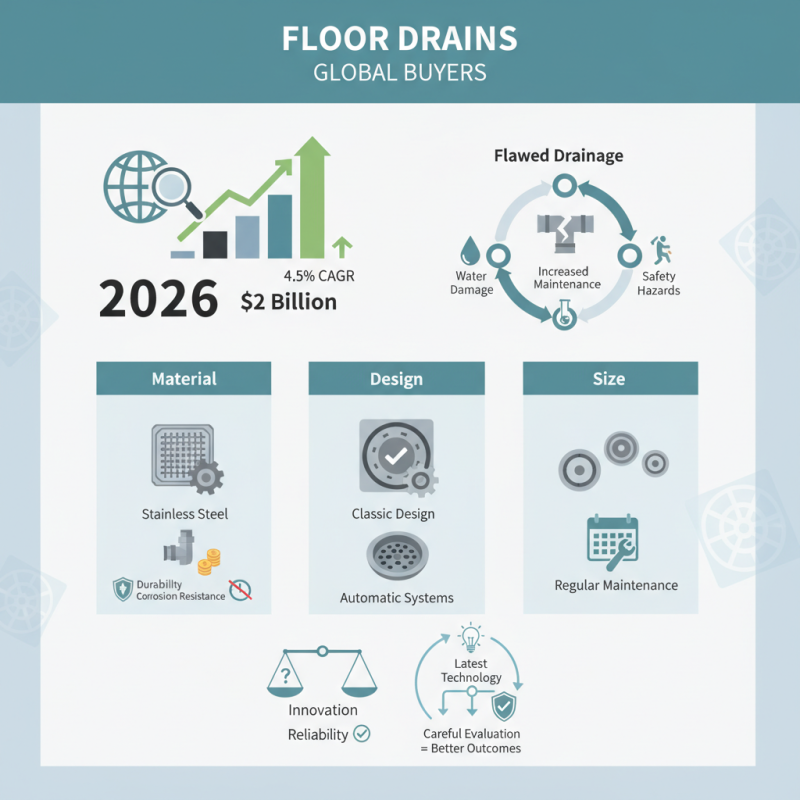
In the evolving construction market, choosing the right Floor Drain is crucial for efficiency and safety. The global floor drain market is projected to reach $2 billion by 2026, growing at a CAGR of 4.5% according to recent industry reports. Flawed drainage systems can lead to water damage, increased maintenance costs, and safety hazards, making informed choices essential.
The selection of Floor Drain involves understanding various factors, including material, design, and size. Stainless steel drains, for instance, offer durability and resistance to corrosion, ideal for commercial settings. Meanwhile, plastic alternatives may reduce costs but lack longevity. Each option presents a trade-off, urging buyers to weigh their priorities carefully.
The automatic drainage systems are gaining traction due to their convenience. Yet, they demand regular maintenance to prevent malfunctions. While the latest technology seems promising, potential pitfalls exist. Not all innovations guarantee reliability. A careful evaluation of options can lead to better outcomes, ensuring seamless water management across diverse environments.
Overview of Floor Drain Types and Their Applications
When selecting floor drains, it's essential to understand the different types available. These drains can vary significantly based on application and installation. Common types include point drains, channel drains, and trench drains. Each serves a specific purpose and is suited to various environments, such as kitchens, bathrooms, and outdoor spaces.
Point drains are often used in showers and narrow areas. They effectively collect water from a specific point, avoiding overflow.
Channel drains, on the other hand, are best for larger areas. They guide water towards the drain, preventing pooling.
Trench drains are ideal for driveways and heavy drainage needs, allowing for high flow rates.
Tips: Always consider the surrounding surface when choosing a drain type. Ensure compatibility with your flooring material. Another key factor is to assess local regulations. These can influence your choice and installation procedures. Not all environments may require the same solution, which can lead to problems later. It's crucial to plan carefully. Reflect on your needs before making a decision.
Key Features to Consider When Choosing Floor Drains
When choosing floor drains, several key features stand out. Understanding these aspects can significantly impact functionality. Consider the material of the drain. Stainless steel is popular due to its durability and corrosion resistance. Plastic options may be cheaper but can wear out quickly.
Another important feature is the design. A well-designed drain facilitates better water flow and prevents clogging. Look for drains with removable grates for easy cleaning. An effective trap system can also minimize odors.
Tips: Always measure the drainage area before purchasing. Ensure the drain size fits your space. Check local codes or regulations. Some areas have specific requirements for drainage systems.
Don’t forget to consider installation. Some drains require professional help, while others can be DIY-friendly. Assess your skills realistically. A poorly installed drain can lead to leaks and water damage. Choose wisely and think long-term when making your decision.
Top Rated Floor Drain Brands in 2026 for International Buyers
In 2026, the demand for high-quality floor drains is rising among global buyers. Choosing the right brand can significantly impact functionality and longevity. Buyers often look for durability, ease of cleaning, and effective drainage performance. Many brands now prioritize innovative designs that blend aesthetics with practicality.
One key factor in selecting a floor drain is material quality. Stainless steel options remain popular due to their resistance to rust and corrosion. Yet, some buyers may find plastic alternatives to be lightweight and easier to install. However, they may lack durability over time. Understanding the pros and cons of each material can aid buyers in making informed choices.
Buyers should also consider the drain's size and design compatibility with their space. A well-designed floor drain can prevent clogs effectively. However, not all brands provide reliable filtration systems. Researching customer reviews may help identify reliable choices. This consideration is crucial for ensuring long-term satisfaction with the purchase.
2026 Best Floor Drain Options for Global Buyers
| Drain Type | Material | Flow Rate (GPM) | Size (inches) | Price Range (USD) | Installation Type |
| Standard Floor Drain | Stainless Steel | 20 | 4x4 | $50 - $100 | Floor Mounted |
| Trench Drain | Polymer Concrete | 35 | 6x6 | $150 - $300 | Channel System |
| Linear Drain | Brass | 25 | 2x10 | $100 - $250 | Surface Mounted |
| Shower Drain | PVC | 15 | 2x2 | $30 - $75 | In-Floor Installation |
| Outdoor Drain | Galvanized Steel | 40 | 8x4 | $100 - $200 | Surface or Trench |
Installation Guidelines and Best Practices for Floor Drains
When installing floor drains, proper placement is key. Location affects water flow and drainage efficiency. Drains should be positioned in areas prone to water accumulation. Keep in mind that regular maintenance is essential for long-lasting performance. Regularly check for clogs or debris build-up that can hinder function.
Installation requires attention to detail. Ensure the drain is level to promote effective water flow. Use adequate sealing materials to prevent leaks. A poorly installed drain can lead to water damage. It’s often overlooked until it’s too late. Check local building codes for any specific regulations or recommendations. This ensures compliance and reliability.
Testing the drain after installation is crucial. Run water to observe any pooling or slow drainage. Remember, even the best drains can fail if not installed correctly. Engage a professional, if unsure about the process. They can provide expertise that enhances both safety and efficiency. An informed choice is the foundation of a successful drainage system.
Maintenance Tips for Longevity of Floor Drains in Various Environments
Maintaining floor drains is crucial for their longevity, especially in diverse environments. Regular cleaning prevents clogs and ensures smooth water flow. Use a mixture of vinegar and baking soda for a gentle yet effective clean. This eco-friendly solution eliminates dirt and reduces odors without harsh chemicals.
In commercial spaces, floor drains often face heavy usage. Consider scheduling professional maintenance every six months. This helps to identify potential issues before they become costly repairs. Inspecting drain covers and grates regularly can also prevent debris build-up, which leads to more significant problems.
For residential drains, a simple visual inspection can suffice. If you notice slow drainage, it might signify deeper issues. In basements or outdoor areas, keep drains covered during heavy rainfall to avoid sediment intrusion. Pay attention to any unpleasant smells as they might indicate trapped waste or stagnant water. When the drain isn’t working optimally, it affects surrounding areas. Recognizing these signs early saves time and money.