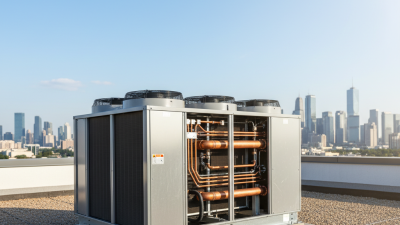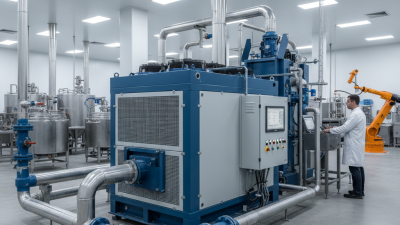
Choosing the best industrial chiller in China requires more than comparing purchase prices. Factory temperature, process loads, water quality, maintenance skills, and local climate all matter. A unit running beside a dusty production line faces different risks from one serving a clean pharmaceutical plant.
Industry research shows why this decision deserves care. Grand View Research reports continued growth in the global industrial refrigeration market, driven by food processing, chemicals, pharmaceuticals, and data infrastructure. The U.S. Department of Energy also identifies cooling systems as major electricity consumers in many facilities. These figures are useful, but they do not select a machine for your factory. A 500-ton chiller may be excessive for one process and inadequate for another.
Dr. Moncef Krarti, an internationally recognized energy-efficiency expert, states, “Energy efficiency is the cheapest energy resource.” His principle applies directly to industrial chiller selection. Buyers should examine full-load and part-load efficiency, compressor technology, refrigerant choice, controls, noise, service response, and five-year operating costs. Ask for tested performance data, not only brochure claims. Check the factory acceptance process. Review spare-parts availability in China.
There is no perfect shortlist. A highly efficient model may need skilled technicians. A cheaper model may consume more power after several hot summers. That uncomfortable trade-off matters. The strongest choice combines verified performance, reliable Chinese support, practical installation, and measurable lifecycle value. This article compares leading options through those operational details, not marketing language alone.
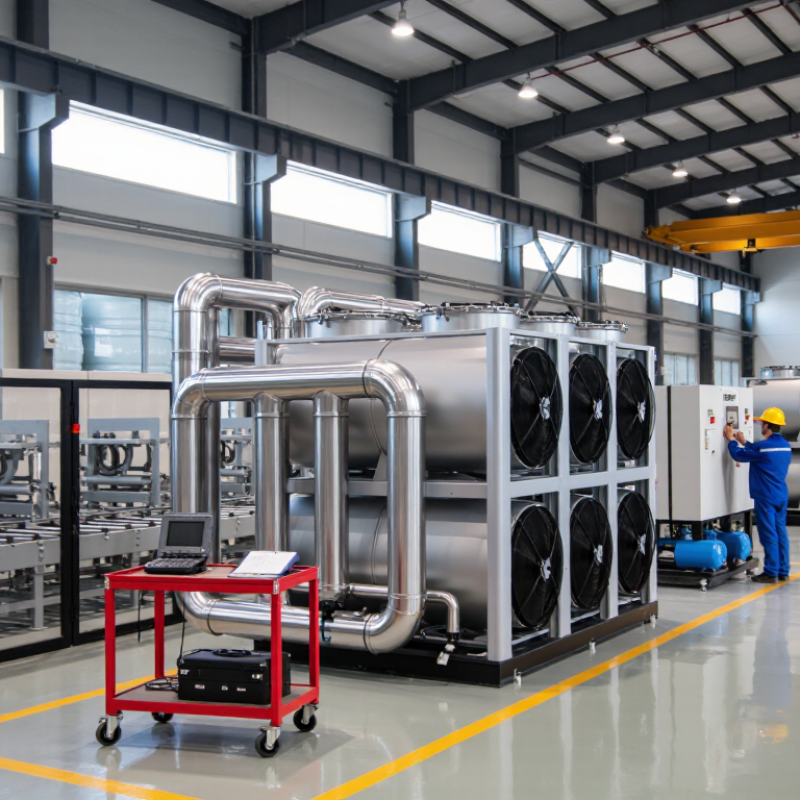
An industrial chiller removes heat from process water or another circulating fluid. It supports stable temperatures in demanding production environments. Common applications include plastics molding, food processing, chemical production, laser cutting, and data centers. A reliable unit helps protect product quality, equipment life, and worker safety.
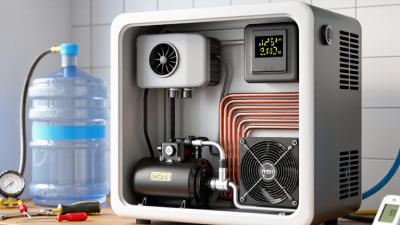
The operating cycle is practical and precise. The compressor raises refrigerant pressure and temperature. The condenser releases heat to air or cooling water. The expansion valve reduces pressure. The refrigerant then absorbs heat inside the evaporator. This cooled fluid returns through pipes to production equipment.
Heat moves. Not always smoothly. Poor insulation, blocked filters, or an undersized pump can reduce actual performance.
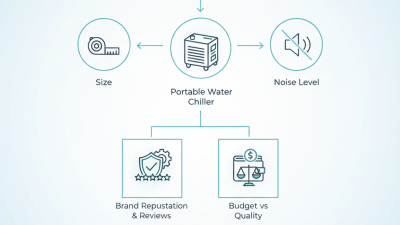
Choosing the best industrial chiller in China depends on operating conditions, not advertising claims. Engineers should check cooling capacity, inlet and outlet temperatures, ambient conditions, water quality, energy use, noise, and service access.
Air-cooled models simplify installation, while water-cooled systems may perform better in large facilities. In plant assessments, technicians also inspect control accuracy and alarm records. A specification sheet can look perfect, yet maintenance access may be inconvenient. That detail is easy to overlook.
Real performance should be tested under changing loads, since factories rarely operate at one fixed capacity. A careful selection also considers spare parts, operator training, and local technical support.
What Is the Best Industrial Chiller in China?
Key Types of Industrial Chillers Manufactured in China
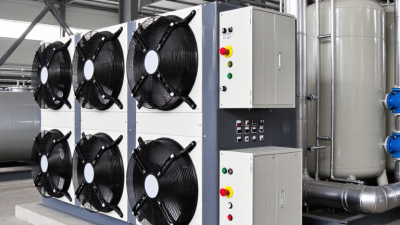
Chinese manufacturers produce several industrial chiller types for factories, warehouses, laboratories, and process plants. Air-cooled chillers reject heat through condenser fans. They need less water and simpler installation. However, they may become less efficient during hot afternoons. Water-cooled chillers use cooling towers or closed-loop systems. They often deliver stable performance for large, continuous operations. Their water treatment needs careful attention.
Scroll chillers suit smaller loads and clean indoor environments. They are compact, quiet, and relatively easy to maintain. Screw chillers handle medium and large process loads. Their strong points include steady operation and good part-load control. Centrifugal chillers can serve major facilities with high cooling demand. They require accurate system design and skilled commissioning. Absorption chillers may use waste heat or steam, reducing electrical demand. Their economics depend heavily on available heat sources.
Selection should begin with the process, not the catalog. Check cooling capacity, leaving-water temperature, ambient conditions, refrigerant type, and operating hours. In practical projects, I also inspect pump curves, control logic, condenser fouling risks, and spare-part access. Do not trust a headline efficiency figure alone. Test conditions may differ from your site. This assumption can fail. Ask for factory test records, performance data, safety documentation, and clear warranty terms. Reliable suppliers explain limitations instead of promising perfect results. A well-matched air-cooled unit may outperform a larger water-cooled system when maintenance resources are limited. The best choice is often less impressive on paper.
What Is the Best Industrial Chiller in China?
Chiller efficiency should begin with measured performance, not brochure claims. Compare COP at full load, then examine IPLV or NPLV under changing loads. AHRI Standard 550/590 provides a recognized method for testing water-cooled and air-cooled chillers. The IEA’s The Future of Cooling report projects global cooling electricity demand could more than triple by 2050. Small efficiency gains matter.
Capacity must match the real process. A unit rated at 500 kW may perform differently when entering water reaches 32°C. Check cooling capacity, flow rate, leaving-water temperature, and fouling conditions together. For Chinese factories, engineers should review GB/T 18430.1 requirements and verify performance under local summer conditions. Oversizing looks safe, but it can increase short cycling and reduce part-load efficiency.
Reliability is less visible.
Review compressor start counts, vibration records, alarm history, and heat-exchanger pressure loss. The U.S. Department of Energy recommends regular condenser cleaning because dirty surfaces raise condensing pressure and energy use. Ask for at least three years of service data from similar duty cycles, not only laboratory results. A practical acceptance test should record power input, water temperatures, flow, and ambient conditions. One weakness remains: many evaluations use clean equipment and stable loads. Real plants are messier. That gap deserves attention.
The best industrial chiller is rarely the cheapest unit. Plant engineers usually compare cooling stability, energy use, water conditions, and service response. These factors matter more during a hot summer shift. The right choice depends on process temperature, operating hours, and load changes.
Energy performance deserves careful attention. The UNEP Cooling Emissions and Policy Synthesis Report states that global cooling demand could more than triple by 2050. A chiller with strong part-load efficiency can reduce long-term electricity costs. Check COP and IPLV data under realistic factory conditions. Do not rely only on laboratory ratings. The IEA also identifies cooling as a major future driver of electricity demand. Refrigerant selection, noise levels, controls, and local efficiency requirements also affect procurement.
A low purchase price still looks attractive. That can be a costly mistake.
Tips: Request twelve months of operating data before selecting capacity. Leave room for seasonal load changes. Confirm water-treatment needs, condenser fouling tolerance, and spare-parts availability. Ask for measured performance at 25%, 50%, and 75% load. Review commissioning procedures and response times in writing. ISO 50001 guidance supports continual energy-performance improvement, but many projects still neglect operator training. That weakness is easy to overlook. Independent testing, clear warranties, and documented maintenance records provide stronger evidence than sales claims.
Installation determines whether a chiller performs like its factory test.
In China, engineers should verify water quality, ambient temperature, voltage stability, and available service clearance before delivery. Poor pipe alignment can transmit vibration into the compressor. Insufficient airflow can raise condensing pressure during summer peaks. I would not approve installation without measuring flow, pressure, insulation thickness, and electrical load under operating conditions.
Maintenance affects costs more than many buyers expect.
The U.S. Department of Energy reports that regular commissioning and control improvements can reduce building energy use by roughly 10–20%. For industrial chillers, technicians should record approach temperature, refrigerant pressure, compressor current, and condenser fouling.
Keep real records. Cleaning a scaled condenser may restore capacity, but delayed cleaning can increase energy consumption for months. A test certificate is useful, not a guarantee.
Long-term cost depends mainly on electricity, water, spare parts, and downtime.
The International Energy Agency estimates cooling accounts for about 10% of global electricity consumption. Therefore, a small efficiency difference can become expensive across 10 or 15 years. Buyers should compare seasonal kW per refrigeration ton, not only rated capacity.
An annual energy model should include local tariffs and production schedules. It may still be imperfect. However, transparent assumptions are more reliable than a low purchase price and vague efficiency claims.