
China Top 10 Reaction Injection Molding Manufacturers?

China’s automotive sector gives Reaction Injection Molding manufacturers a substantial market to serve. The China Association of Automobile Manufacturers reported 30.16 million vehicles produced in 2023. OICA reported 93.5 million vehicles produced worldwide that year. These figures describe automotive production, not RIM demand directly. They do, however, show the scale of a key market for lightweight, molded components.

RIM can produce large, complex polyurethane parts with relatively low tool pressure. Yet supplier quality depends on more than process capability. Buyers should examine tooling design, material consistency, dimensional control, production capacity, and after-sales support. Polyurethane specialist David Randall’s technical work offers a useful reminder: formulation and processing need to be considered together. This is a paraphrase, not a verbatim quotation. A practical point.

This “China Top 10 Reaction Injection Molding Manufacturers” guide will compare suppliers through those measurable criteria. It will also distinguish documented capabilities from broad marketing claims. Public information can be incomplete, and factory profiles do not always reveal real-world process consistency. Treat the shortlist as a starting point. Request samples, inspect relevant certifications, and verify performance against your part specifications before choosing a partner.
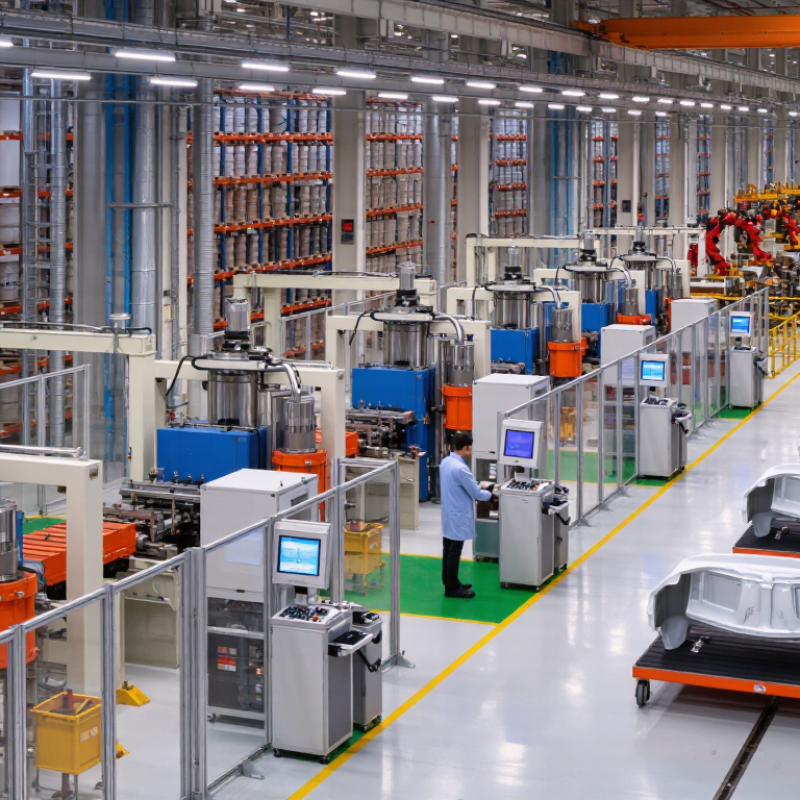
China Top 10 Reaction Injection Molding Manufacturers?

What Is Reaction Injection Molding and How Does the Process Work?

China Top 10 Reaction Injection Molding Manufacturers?
What Is Reaction Injection Molding and How Does the Process Work?

Reaction injection molding (RIM) forms parts by reacting liquid polymer components inside a closed mold. The liquids are mixed quickly, then injected into the mold. They flow into its cavities and cure into a solid shape. That’s the core idea.

Unlike conventional injection molding, RIM often uses low-viscosity feedstocks and lower injection pressures. This can help produce large, lightweight parts with ribs and integrated details. Operators meter the components, mix them in a dedicated head, and monitor temperature, shot size, and curing time. Small errors matter. Poor mixing can leave soft spots, while excess heat may distort a part.

Material choice matters, too. Grand View Research’s Polyurethane Market Size, Share & Trends Analysis Report valued the global polyurethane market at US$78.1 billion in 2022, forecasting 5.8% annual growth from 2023 to 2030. This is a broad polyurethane estimate, not a RIM-only market figure. Still, it indicates a substantial materials ecosystem behind many RIM formulations. When assessing suppliers, request process records, sample sections, and repeatability data—not just a polished surface. A smooth panel can hide uneven density. No single test tells the whole story; tool design and operator control deserve equal attention.

Reaction Injection Molding: Typical Process Time Windows

In RIM, reactive liquid components are mixed and injected into a mold, where they cure before the part is removed.

Indicative process ranges: mixing and injection, 5–15 seconds; in-mold curing, 60–300 seconds; demolding, 5–30 seconds. Actual times vary with resin formulation, part geometry, mold temperature, and equipment.

How Is China’s Reaction Injection Molding Industry Structured?

China’s reaction injection molding (RIM) industry is best understood as a supply chain, not a simple list of factories. Upstream suppliers provide polyurethane system materials, additives, and mold-making services. Processors mix liquid components and inject them into closed molds, often producing large, lightweight parts with detailed shapes. Downstream demand comes from vehicle interiors, industrial equipment, and building products.

The chain is concentrated around manufacturing regions such as the Yangtze River Delta, Pearl River Delta, and Bohai Rim, where materials, tooling, and assembly suppliers are relatively close.

The broader plastics sector gives useful context, but it does not measure RIM alone. China’s National Bureau of Statistics reported 74.885 million tonnes of plastic products output in 2023. That figure covers many processes, so it should not be mistaken for RIM production. Grand View Research valued the global RIM market at about US$1.24 billion in 2023 and forecast 7.2% annual growth from 2024 to 2030.

These figures indicate demand potential, not China’s exact share. RIM capacity is spread across specialist processors and contract manufacturers, while customer specifications shape each project.

Temperature control, component ratios, and mold design can affect part consistency. Small process changes matter. Public data rarely separates RIM from wider polyurethane molding, leaving the industry’s size difficult to pin down.

What Criteria Help Identify Leading Chinese RIM Manufacturers?

A sound shortlist starts with process evidence, not a “top ten” label. Ask each Chinese supplier for recent RIM parts close to your design in size, wall thickness, and production volume. Check whether its team controls mold temperature, mix ratio, injection pressure, and curing time. These settings affect surface finish, voids, and dimensional stability. Request inspection records, not just attractive sample parts. A polished sample can hide inconsistent production.

Material knowledge matters. Grand View Research estimated the global polyurethane market at USD 78.1 billion in 2023 and projected 5.3% annual growth from 2024 to 2030. This is not a RIM ranking, but it signals a broadening materials market. Ask suppliers how they track resin batches, adjust formulations, and test parts after aging or temperature changes. Numbers need context. A certificate alone cannot prove that a specific part will perform reliably.

Compare tooling capability, measurement methods, documented quality controls, and engineering response time. Ask for dimensional reports tied to the actual drawing, plus a clear plan for pilot runs and design changes. Check references for similar applications and confirm who handles mold maintenance. If possible, visit the production floor and observe a run. I would still treat any checklist as a starting point: real performance depends on the part, material, and operating conditions.

Who Are 10 Notable Reaction Injection Molding Manufacturers in China?

China has a broad reaction injection molding (RIM) supply base, but a “top ten” ranking needs verifiable company names and current production data. Without naming brands, buyers can compare ten notable manufacturer profiles by their demonstrated capabilities. These include suppliers focused on automotive fascia, agricultural machinery panels, industrial equipment housings, electrical enclosures, transport interiors, fitness equipment, furniture components, custom prototypes, low-volume production, and large-part molding.

The application matters. A supplier making a broad, thin panel may not suit a thick, ribbed enclosure. Ask each manufacturer for sample parts, material specifications, dimensional inspection records, and details about mold design and process control.

Look closely at corners, inserts, and surface finish. Small defects show up clearly under workshop lighting. Ask about them.

Some suppliers emphasize design support, while others are better equipped for repeat production or oversized parts. Verify capacity with a relevant project, not a polished brochure. A plant visit can reveal storage conditions, equipment upkeep, and how operators handle rejected parts. Details matter. No single profile is best for every buyer, and supplier claims still need checking.

How Do Their Capabilities and Applications Compare?

China’s leading reaction injection molding manufacturers differ less by machine count than by process control. Stronger suppliers usually manage polyurethane formulation, mold temperature, metering, and curing under one roof. That matters when a dashboard panel needs a soft-touch skin, while a structural part needs consistent dimensions. Some firms also offer tooling and prototype support. Others focus on high-volume molding, where repeatability and cycle time matter more.

Demand is broad, but market data needs careful reading. The China Association of Automobile Manufacturers reported 31.28 million vehicles produced in 2024, creating a large potential market for lightweight interior and exterior components. The National Bureau of Statistics recorded about 74.9 million tonnes of plastic products output in 2023; that figure covers many processes and does not isolate RIM. Useful context, not proof of RIM capacity. Buyers should compare material traceability, part-size limits, defect controls, and test records—not just quoted tonnage.

Application fit varies. Low-pressure RIM can produce large, complex parts with fewer tooling constraints than some high-pressure methods. This suits trim, fascia, enclosures, and protective housings. Yet surface finish and dimensional stability can vary with resin chemistry and shop-floor conditions. Ask for a sample part. Check it under real assembly conditions. A supplier’s brochure rarely shows the whole picture, and a “top ten” ranking may not use consistent criteria.