
Global buyers are reassessing compact displays in 2026. A 2.8 Inch TFT LCD Display can fit tight enclosures, yet still support readable graphics, touch controls, and product status information. It commonly appears in handheld instruments, smart meters, medical accessories, industrial controllers, and portable payment equipment. The physical details matter: a 2.8-inch panel may sit behind a 70-millimeter front bezel, while its cable and backlight define the real installation space.
Industry data supports this continued demand for compact visual interfaces. Omdia’s Display long-term demand analysis shows that display adoption remains closely linked to embedded devices, industrial equipment, and connected products. The company’s research also highlights ongoing pressure on panel pricing, supply stability, and technology differentiation. Meanwhile, MarketsandMarkets’ TFT LCD market research identifies automotive, consumer electronics, and industrial applications as important demand segments. These findings suggest that buyers should compare more than resolution or unit price.
Brightness is practical evidence. A 500-nit screen can be more useful than a higher-resolution panel in a factory doorway. Interface type matters too. SPI can simplify small embedded designs, while RGB and MIPI interfaces may suit faster graphics. Buyers should verify viewing angle, operating temperature, touch integration, contrast, lifetime, and RoHS documentation before approving samples.
The market is not perfectly predictable. Forecasts vary by application and region. That uncertainty deserves attention. This guide reviews the top 2.8 Inch TFT LCD Display types for global buyers, combining technical specifications, supplier experience, and application-based selection criteria. The goal is dependable decisions, not attractive datasheets alone.
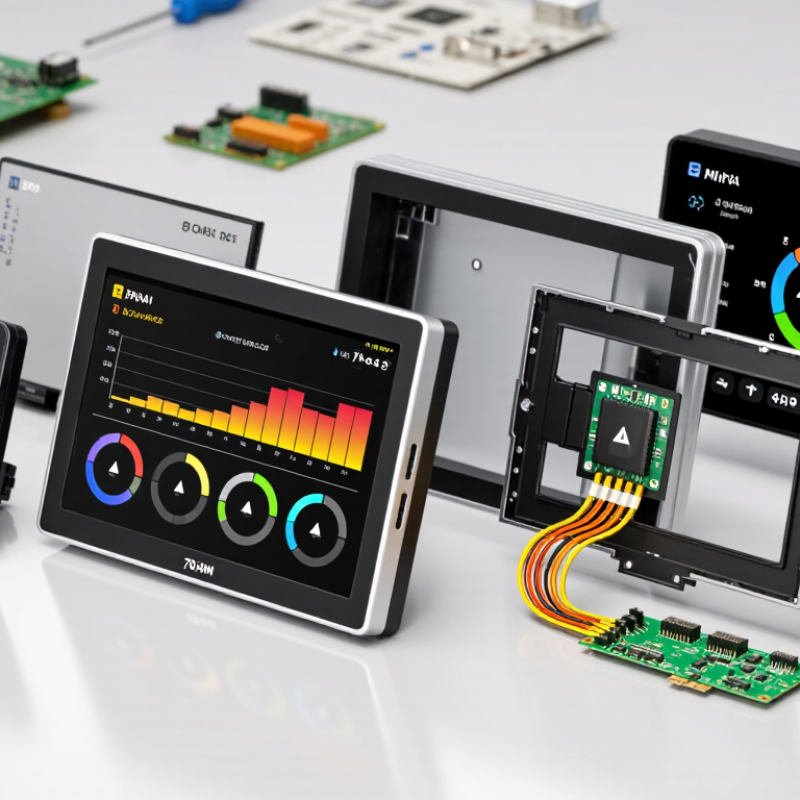
A 2.8-inch TFT LCD display is a compact flat-panel module measured diagonally across its visible area. It uses a thin-film transistor backplane to control individual pixels. A liquid-crystal layer shapes light from an LED backlight. The result is a bright, electrically controlled image for instruments, handheld terminals, medical monitors, and control panels.
The diagonal size does not define the module’s full dimensions. A 2.8-inch screen may use a 240 × 320, 320 × 240, or 480 × 640 pixel layout. A 240 × 320 panel delivers roughly 143 pixels per inch, while 480 × 640 reaches about 286 pixels per inch. Sharpness improves, but so can power demand. Omdia’s 2024 Display Long-Term Demand Forecast continues to identify LCD as a high-volume display technology across established device categories. Its market tracking also separates panel demand by area, application, and resolution, which matters when comparing small modules.
Interface choice is equally important. SPI suits simple graphics and low pin counts. RGB or MIPI interfaces support faster refresh and richer images. Resistive or capacitive touch layers may be added, but touch is not part of every TFT module. Viewing angle, luminance, operating temperature, and connector placement deserve physical testing. A catalog number alone can mislead. IEC 61747-1 guidance for liquid-crystal display devices supports careful checks of optical and electrical characteristics, yet real enclosure glare may still reduce readability. That is the part buyers often underestimate.
Choosing a 2.8-inch TFT LCD in 2026 requires more than checking resolution. Small screens are not simple. According to MarketsandMarkets, the global display market is projected to exceed USD 200 billion by 2029. This growth reflects stronger demand for compact interfaces in medical tools, industrial meters, and portable instruments.
The main panel types are TN, IPS, and transflective TFT LCDs.
TN panels usually offer lower cost and fast response, but viewing angles are limited.
IPS panels provide wider viewing angles and steadier color performance, which helps when operators read screens from the side.
Transflective panels combine reflected and transmitted light. They remain useful in outdoor equipment, although indoor brightness can feel less impressive.
A 2024 Omdia display demand analysis also identified industrial and embedded applications as stable demand areas, despite uneven consumer electronics cycles.
Resolution choices
commonly include 240 × 320, 320 × 240, and 480 × 640 pixels.
Interface options
include SPI, parallel RGB, and MCU communication, with SPI simplifying wiring but reducing refresh performance.
Touch versions
may use resistive or capacitive sensing.
In practical testing, sunlight readability, connector placement, and startup timing often matter more than specifications alone. This is easy to overlook.
IEC 62341-related reliability practices and supplier aging tests can improve confidence, but report definitions and test conditions differ. Buyers should request measured luminance, viewing-angle data, operating-temperature results, and sample validation before approving volume production.
2026 Top 2.8 Inch TFT LCD Display Types for Global Buyers
Core Specifications and Performance Differences
A 2.8-inch TFT LCD usually uses 240 × 320 or 320 × 240 pixels. The first suits portrait interfaces, while the second supports wider control panels. Omdia’s 2024 Small and Medium Display Market Tracker identifies industrial, medical, and automotive equipment as strong demand areas for compact displays. These applications need stable readability, not only attractive colors.
IPS panels normally provide viewing angles near 160 degrees and better color consistency. TN panels can cost less and respond quickly, but colors shift noticeably from the side. Transflective TFTs improve outdoor visibility by combining frontlight and reflected ambient light. Standard transmissive panels often deliver 250–500 cd/m², while sunlight-readable versions may exceed 800 cd/m². The difference is visible beside a window.
Interface choice also affects system performance. SPI reduces wiring and suits simple menus, but screen refresh can feel slow with large images. Parallel RGB or 8080 interfaces move data faster and increase pin usage. The MIPI Display Serial Interface specification supports efficient high-speed communication, but small controllers may not handle it smoothly. Mordor Intelligence’s 2024 TFT LCD market analysis highlights cost, power consumption, and application-specific performance as key purchasing factors. In practical testing, touch cover glass can reduce contrast by 8–15 percent. That detail is easy to miss. A panel may meet its datasheet brightness, yet still look weak after assembly.
Core Specifications and Performance Differences
The chart shows representative values commonly specified for 2.8-inch TFT LCD modules. IPS panels generally provide the widest viewing angle, TN panels offer fast response and cost efficiency, while transflective panels are better suited to applications requiring readability under strong ambient light. Actual brightness, response time, viewing angle, resolution, and power consumption vary by module design and operating conditions.
2026 Top 2.8 Inch TFT LCD Display Types for Global Buyers
A 2.8-inch TFT LCD suits compact meters, handheld terminals, smart controllers, and portable medical equipment. IPS panels offer wider viewing angles, while TN panels usually reduce cost and power demand. Capacitive touch supports modern interfaces, but resistive touch can work better with gloves or styluses. Brightness matters outdoors. A glossy screen may look vivid indoors, yet reflections can weaken field usability.
Compliance requires more than checking a familiar mark. Buyers should request material declarations, test reports, and traceable production records. RoHS and REACH requirements may apply to the display or the finished product, depending on the market. EMC, electrical safety, and recycling obligations can also involve the final device. Requirements differ by destination. A supplier’s certificate may not cover your complete assembly.
Tips: Define viewing angle, luminance, touch method, operating temperature, and connector type before requesting quotations. Ask for samples from normal production, not only engineering builds. Confirm pixel defects, backlight uniformity, and touch accuracy through written acceptance criteria. Check lifecycle notices, minimum order quantities, and replacement options early. Supply disruptions often begin with one unavailable driver IC. Keep approved alternatives, but test them carefully. A second source can reduce risk, although matching color and firmware may take longer than expected. Datasheets sometimes omit practical details, so inspect samples under real lighting and handling conditions.
| Display Type | Typical Resolution | Interface Options | Typical Optical / Electrical Characteristics | Suitable Applications | Key Compliance Considerations | Supply-Chain Considerations |
|---|---|---|---|---|---|---|
| Standard 2.8-inch QVGA TFT LCD | 240 × 320 pixels; portrait orientation | SPI, 8/16-bit MCU parallel, or RGB depending on controller configuration | Approx. 4:3 aspect ratio; 262K or 65K colors are common; LED backlight; typical logic supply around 2.8–3.3 V | Handheld instruments, control panels, point-of-sale terminals, small test equipment, and embedded user interfaces | Verify RoHS and REACH declarations; assess WEEE obligations for the finished product; confirm EMC and safety requirements at system level | Generally broad availability; confirm controller IC continuity, FPC orientation, mounting-hole locations, and long-term availability before tooling |
| Landscape QVGA TFT LCD | 320 × 240 pixels; landscape orientation | SPI for lower refresh requirements; RGB or MCU parallel for faster graphics | 4:3 aspect ratio; commonly available with transmissive color TFT technology and LED backlight; viewing-angle performance varies by panel mode | Industrial meters, laboratory devices, vehicle accessories, compact dashboards, and machine-control displays | Check electromagnetic compatibility of the display cable and backlight circuit; confirm material declarations and applicable market-entry documentation | Mechanical orientation must be fixed early; compare active-area dimensions, bezel size, connector position, and viewing direction across suppliers |
| Resistive-Touch 2.8-inch TFT Module | Typically 240 × 320 or 320 × 240 pixels | Display interface plus 4-wire or 5-wire resistive-touch interface; touch controller may use ADC, SPI, or I²C | Usable with a bare finger, glove, or stylus; single-touch input is typical; touch cover can reduce optical clarity and increase stack thickness | Medical and laboratory instruments, factory terminals, handheld meters, service tools, and environments requiring stylus input | Evaluate enclosure ingress protection, cleaning-agent compatibility, electrical safety, EMC, and restrictions on substances in the touch-film assembly | Touch-panel calibration and bonding affect yield; request lifecycle data for both the TFT panel and touch controller; retain approved samples for incoming inspection |
| Projected-Capacitive-Touch TFT Module | Typically 240 × 320 or 320 × 240 pixels | Display interface plus I²C or USB touch-controller interface; SPI display control is also common | Multi-touch capability is possible; supports finger input and selected gloves; cover-lens thickness, glove mode, and water tolerance require application-specific validation | Portable medical equipment, smart appliances, access terminals, compact HMI panels, and consumer or professional handheld products | Validate EMC immunity, ESD performance, optical bonding, chemical resistance, and regional radio/electrical requirements for the complete product | Touch controller firmware can create software dependence; freeze firmware, connector, cover-lens, and sensor specifications before production qualification |
| High-Brightness TFT LCD | Usually 240 × 320 or 320 × 240 pixels | SPI, MCU parallel, or RGB; backlight enable and PWM dimming are commonly provided | Often specified above ordinary indoor brightness levels; exact luminance, contrast, LED current, and thermal limits must be confirmed in the datasheet | Outdoor instruments, vending equipment, transportation controls, agriculture equipment, and displays exposed to strong ambient light | Assess photobiological and thermal risks where relevant; verify EMC from the LED driver and system-level environmental protection | Higher LED current can increase heat and power demand; require luminance uniformity data, LED lifetime conditions, and burn-in or aging criteria |
| Wide-Temperature 2.8-inch TFT LCD | Commonly 240 × 320 or 320 × 240 pixels | SPI, MCU parallel, or RGB; interface voltage and timing must be checked across the rated temperature range | Industrial versions may be specified for approximately −20°C to +70°C or wider ranges; contrast, response time, and backlight output can vary with temperature | Outdoor controls, industrial automation, energy meters, transportation systems, and equipment installed in uncontrolled environments | Confirm environmental, EMC, vibration, shock, and safety requirements for the final equipment; display temperature rating does not automatically certify the whole product | Request temperature test reports and cold-start behavior; maintain approved alternate sources because specialized panels may have longer replenishment times |
| Sunlight-Readable TFT LCD | Typically 240 × 320 or 320 × 240 pixels | SPI, RGB, or MCU parallel; some designs add optical bonding or transflective enhancements | Readability depends on luminance, contrast, polarizer performance, anti-glare treatment, reflection, and viewing angle—not brightness alone | Portable field instruments, marine controls, outdoor monitoring units, logistics terminals, and vehicle-mounted equipment | Validate glare, UV exposure, enclosure sealing, thermal management, ESD, EMC, and any transport or outdoor-equipment standards applicable to the system | Optical films and bonding materials can have separate availability risks; approve samples under direct sunlight and specify measurable readability criteria |
| Bare TFT Panel with Separate Controller Board | Usually 240 × 320 or 320 × 240 pixels | Panel-side RGB, MCU, or SPI through a separately designed controller board | Provides maximum design flexibility but requires separate power sequencing, timing configuration, backlight control, and signal-integrity validation | High-volume embedded products, custom industrial HMIs, research equipment, and designs requiring a dedicated electronics architecture | The finished assembly—not only the panel—must be evaluated for EMC, electrical safety, restricted substances, labeling, and market-specific obligations | Requires more engineering and incoming controls; manage panel, controller IC, PCB, FPC, and backlight as separate potential obsolescence risks |
Buyer note: Specifications shown are representative industry ranges for 2.8-inch TFT LCD products. Final purchasing decisions should be based on the supplier’s current datasheet, qualification samples, environmental test reports, material declarations, change-notification policy, and production inspection criteria.
