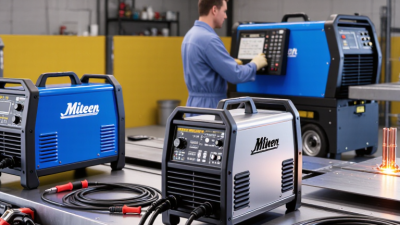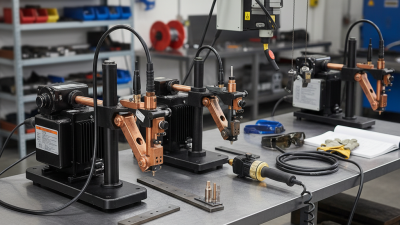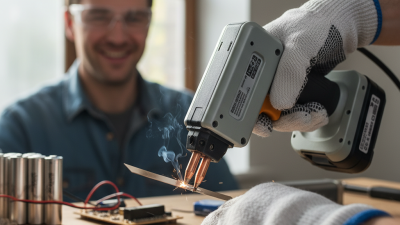
China has become an important sourcing base for industrial resistance welding equipment. This guide examines China’s top miller spot welder manufacturers and suppliers through practical buying criteria, not advertising claims. A reliable supplier should explain welding current, electrode force, duty cycle, transformer capacity, and sheet-metal limits clearly.
Professor John C. Lippold, a respected welding-metallurgy authority, wrote, “Weldability is the capacity of a material to be welded under imposed fabrication conditions.” This principle applies directly to every miller spot welder selection. Copper electrodes may look simple, yet their tip shape, cooling condition, and pressure strongly influence nugget size. A machine that performs well on mild steel may behave differently with galvanized sheet or aluminum.
Look closely.
Strong manufacturers usually provide factory testing, electrical documentation, spare-part availability, and trained service support. Buyers should request sample welds using their actual material thicknesses. They should also inspect controller stability, foot-pedal response, cable quality, and cooling performance during repeated cycles. Supplier audits can reveal assembly discipline, calibration practices, and packaging standards that brochures rarely show.
No supplier is perfect. Some product pages remain vague about continuous output, and some buyers compare prices before comparing weld consistency. That is a mistake worth admitting. Delivery time, installation guidance, warranty terms, and export documentation also affect the real purchase cost. The best China-based miller spot welder partner is not necessarily the cheapest. It is the supplier that can demonstrate repeatable results, communicate limitations honestly, and support the equipment after arrival. This overview helps manufacturers, repair shops, and metal fabricators make that judgment with greater confidence.
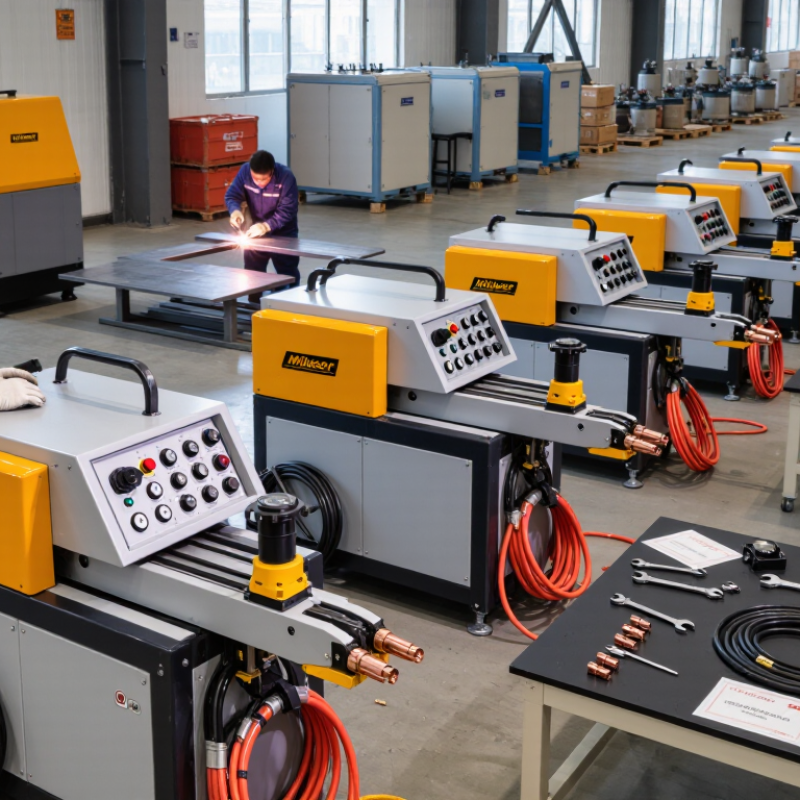
What Is a Miller Spot Welder?
A Miller spot welder is a resistance welding machine for joining overlapping metal sheets. It presses two electrodes against the workpiece. Electrical current then creates heat at the contact point, forming a compact weld nugget. No filler metal is normally required. The process is quick, repeatable, and suitable for steel panels, brackets, and thin assemblies.
The machine’s performance depends on current, weld time, electrode force, and surface condition. Operators must balance these settings carefully. Too much heat can burn through sheet metal. Too little heat creates a weak joint. Real workshop experience shows that clean contact surfaces matter more than many buyers expect. Small rust spots or oil films can distort results.
Demand is growing with vehicle production and lightweight fabrication. The International Energy Agency reported nearly 14 million electric cars sold worldwide in 2023, representing about 18% of new car sales. A 2024 Grand View Research assessment also identifies automotive production as a major resistance-welding application. These figures suggest continued equipment demand, but they do not guarantee every machine suits every metal. Copper alloys, galvanized steel, and advanced high-strength steel may require different electrode designs and controls. That detail is easy to overlook. Testing sample parts remains the more reliable purchasing method.
Industrial spot welders are valued for speed, repeatability, and controlled heat input. Their core systems include programmable welding current, adjustable weld time, electrode force control, and transformer-based power delivery. These features help create consistent joints without filler metal. Water-cooled electrodes also protect production stability during long shifts.
According to the International Federation of Robotics, automotive factories installed 135,461 industrial robots worldwide in 2023. Spot welding remains a major robotic application because it suits repetitive body-panel assembly. Beyond vehicles, these welders support appliances, metal cabinets, battery enclosures, and light structural components. Typical machines can join overlapping steel sheets in milliseconds, leaving small, clean weld marks. However, published specifications can look too optimistic. Material coatings, electrode wear, and unstable air pressure may reduce actual performance.
Tips: Match electrode geometry to sheet thickness and coating type. Check weld current with calibrated equipment, not visual appearance alone. Record force, time, and resistance for each material batch. ISO 9001-based quality controls can improve traceability, while ISO 4063 terminology helps teams describe resistance welding processes accurately. Operators should also inspect electrode tips regularly. A worn tip may produce weak nuggets before defects become visible. For buyers comparing suppliers in China, request sample welds, durability records, replacement-part availability, and test data under realistic production conditions.
Evaluating a Chinese spot welder manufacturer requires more than comparing prices. Review its factory history, production capacity, and quality controls. Ask for equipment photographs, inspection records, and traceable component lists. A reliable supplier should explain transformer ratings, welding current, electrode pressure, and cooling requirements clearly. Vague answers deserve caution.
Request sample welds using your actual materials and thicknesses. Examine nugget size, surface marks, spatter, and joint strength. Ask whether technicians can adjust welding time, current, and pressure for different applications. A serious manufacturer should provide test data, operating instructions, and maintenance schedules. Check whether replacement electrodes and control parts remain available after delivery.
Visit the factory when possible, or arrange a live video inspection. Observe assembly areas, testing equipment, safety procedures, and final inspection routines. Confirm applicable certifications and export documentation independently. Customer references can reveal response times, not just product quality. A polished showroom proves little. No audit is perfect. Even experienced buyers can overlook after-sales support or unstable component sourcing. I would treat a low quotation as a starting question, not a purchasing decision. Clear communication, documented testing, and accountable service usually indicate stronger long-term reliability.
China’s top spot welder manufacturers and suppliers serve automotive, appliance, hardware, and metal fabrication businesses. Experienced suppliers usually provide resistance welding machines with stable transformers, adjustable welding current, and pneumatic or servo electrode pressure. These features help produce consistent joints on steel, stainless steel, and coated sheet materials.
A reliable supplier should explain duty cycle, electrode life, cooling requirements, and maintenance intervals in clear technical language. Ask for sample welds using your actual material thickness. A small test panel can reveal weak nuggets, excessive marks, or uneven pressure. It is also useful to inspect the control cabinet, cable arrangement, and spare-part availability before placing an order.
Factory experience matters.
Some Chinese manufacturers offer customized arms, welding heads, and automated feeding systems. Others focus on compact manual equipment for workshops. The best choice depends on production volume, part geometry, and operator skill. Do not judge quality by appearance alone. A polished machine may still have poor current control. I have found that detailed testing often matters more than a low quotation. Suppliers should provide operating instructions, electrical drawings, inspection records, and responsive after-sales support. No supplier is perfect. Buyers should document every requirement and verify performance before shipment.
Choosing a Chinese spot welder supplier requires more than comparing prices. The International Federation of Robotics reported that China installed 276,288 industrial robots in 2023, representing 51% of global installations. This indicates strong manufacturing depth, but automation capacity does not guarantee reliable welding equipment. Ask for test welds using your actual material, thickness, and production cycle. Review electrode pressure, current stability, transformer rating, cooling design, and duty cycle. Request traceable inspection records, electrical safety documents, and a clear warranty.
The World Bank’s 2023 Logistics Performance Index ranked China 19th globally, supporting efficient export infrastructure. Still, delivery performance varies between suppliers. Check factory ownership, technician experience, spare-parts availability, and after-sales response times. A video tour is useful, but an independent factory audit is better. Do not accept vague claims such as “industrial grade.” Require measurable tolerances and acceptance criteria. A low quotation may look attractive, yet weak cooling can create expensive downtime. This is easy to underestimate.
Tips: Compare at least three suppliers. Send identical welding samples to each one. Measure nugget diameter, pull strength, cycle time, and surface marks. Confirm whether the quoted price includes tooling, commissioning, packaging, and replacement electrodes. Review the contract carefully. One uncomfortable question matters: who repairs the machine after the first year? Supplier websites can be polished, but practical evidence remains more trustworthy.
| Evaluation Dimension | Typical Range or Requirement | Why It Matters | Recommended Verification |
|---|---|---|---|
| Machine Type | Stationary, portable, robotic, or multi-point resistance spot welder | The correct configuration depends on workpiece size, production volume, and access to the weld area. | Request a layout drawing, machine photographs, and a process recommendation for the actual workpiece. |
| Rated Welding Current | Common industrial resistance welders are often specified from approximately 5 kA to above 30 kA, depending on capacity. | Current affects the heat generated at the weld interface and the maximum material thickness that can be joined. | Ask for a current-versus-material-thickness chart and confirm the measurement method used. |
| Material and Thickness Capacity | Capacity varies by material, usually expressed as a combined sheet-thickness range rather than a single universal value. | Steel, stainless steel, coated sheet, aluminum, and dissimilar metals require different current, time, and electrode settings. | Provide sample material, thickness, coating information, and required nugget or peel-test criteria. |
| Input Power and Voltage | Industrial models commonly use three-phase power; supply voltage and frequency must match the installation site. | A mismatch can cause unstable operation, overheating, or the need for an additional transformer. | Confirm rated voltage, frequency, phase, maximum input current, circuit-breaker requirements, and wiring diagram. |
| Duty Cycle | Duty-cycle ratings are commonly stated at a defined welding current and time, often using a percentage over a ten-minute period. | A higher duty cycle supports continuous production and reduces thermal overload risk. | Check the duty-cycle test condition rather than comparing percentages without their current and time values. |
| Electrode Force | Pneumatic systems are commonly selected according to required force, electrode geometry, and material thickness. | Stable force is essential for consistent contact resistance, nugget formation, and splash control. | Request the force range, cylinder size, regulator specification, and force repeatability data. |
| Welding Control | Prefer programmable squeeze, weld, hold, and cool sequences with stored parameter groups. | Programmable sequences improve repeatability and make it easier to manage different workpieces. | Request a controller demonstration, parameter backup method, alarm list, and password or access-level details. |
| Transformer and Cooling | Water-cooled transformers, secondary circuits, and electrodes are common for medium- and high-duty applications. | Adequate cooling helps control temperature rise and extends the service life of electrical components. | Check cooling-flow requirements, inlet temperature limits, water-quality requirements, and protection alarms. |
| Throat Depth and Work Envelope | The required throat depth depends on the largest panel, flange, or assembly that must be reached. | Insufficient reach can make a machine unsuitable even when its electrical capacity is adequate. | Compare throat depth, arm clearance, electrode travel, table dimensions, and access from both sides. |
| Automation Compatibility | For automated lines, look for remote start, cycle-complete output, fault signals, safety interlocks, and industrial communication options. | Compatible interfaces reduce integration work and support production monitoring. | Request the I/O list, communication protocol details, safety circuit diagram, and integration responsibility matrix. |
| Quality Documentation | A reliable supplier should provide drawings, electrical schematics, manuals, inspection records, and test reports. | Complete documentation supports installation, maintenance, audits, and troubleshooting. | Review document samples before ordering and ensure all documents match the final machine configuration. |
| Compliance and Safety | The machine should be evaluated against the electrical, machinery, and workplace-safety requirements of the destination country. | Compliance affects import clearance, workplace acceptance, insurance, and long-term operation. | Specify the destination-market requirements and verify certificates, declarations, guarding, emergency stops, and interlocks. |
| Factory and Supplier Capability | Prioritize suppliers able to show production facilities, engineering resources, inspection procedures, and relevant export experience. | A capable supplier is more likely to control customization, quality consistency, and after-sales support. | Request a live factory audit, business registration information, process photographs, and references for comparable applications. |
| Sample Testing and Acceptance | Testing should use the buyer's actual material, thickness, joint design, electrode shape, and production cycle. | A sample weld is more meaningful than a generic catalog specification. | Define visual inspection, peel testing, tensile testing, nugget-size targets, cycle time, and acceptance limits in writing. |
| Warranty and Spare Parts | Compare warranty duration, exclusions, remote support, consumable availability, and replacement-part lead times. | Downtime costs can exceed the initial equipment-price difference. | Obtain a written warranty, recommended-spares list, service response times, and parts pricing before purchase. |
| Total Cost of Ownership | Evaluate purchase price together with tooling, shipping, installation, utilities, maintenance, electrodes, and downtime. | The lowest quotation may not deliver the lowest operating cost. | Use a five-year cost comparison with identical assumptions for energy, maintenance, consumables, and service. |
Note: The ranges and requirements above are general procurement benchmarks for comparison only. Actual performance depends on material, joint design, electrode condition, welding schedule, power supply, and machine configuration. Confirm all specifications through application testing and a written technical agreement.