
China’s coffeeware supply chain serves roasters, cafés, equipment brands, and household buyers. Coffee Pot Lids may look simple, but small design choices matter: a snug rim helps limit spills, while a clear viewing window lets users check the brew. Material, heat resistance, fit, and repeatable production also shape purchasing decisions. These details are easy to overlook. They are not minor.
Demand provides useful context, though it does not directly measure lid sales. The International Coffee Organization’s December 2023 Coffee Report and Outlook forecast global coffee consumption at 177 million 60-kilogram bags for 2023/24, up 2.2% year on year. This is a market forecast, not proof of demand for any specific lid design. That distinction matters. Buyers comparing manufacturers in China should therefore look beyond broad market growth and ask for practical evidence: material specifications, sample-fit checks, production tolerances, and documented quality controls. A lid that fits one pot may not fit another. It sounds obvious, yet product listings do not always make compatibility clear. This guide introduces leading Chinese manufacturers and the factors behind a more careful shortlist, while recognizing that supplier capabilities and product ranges can change.
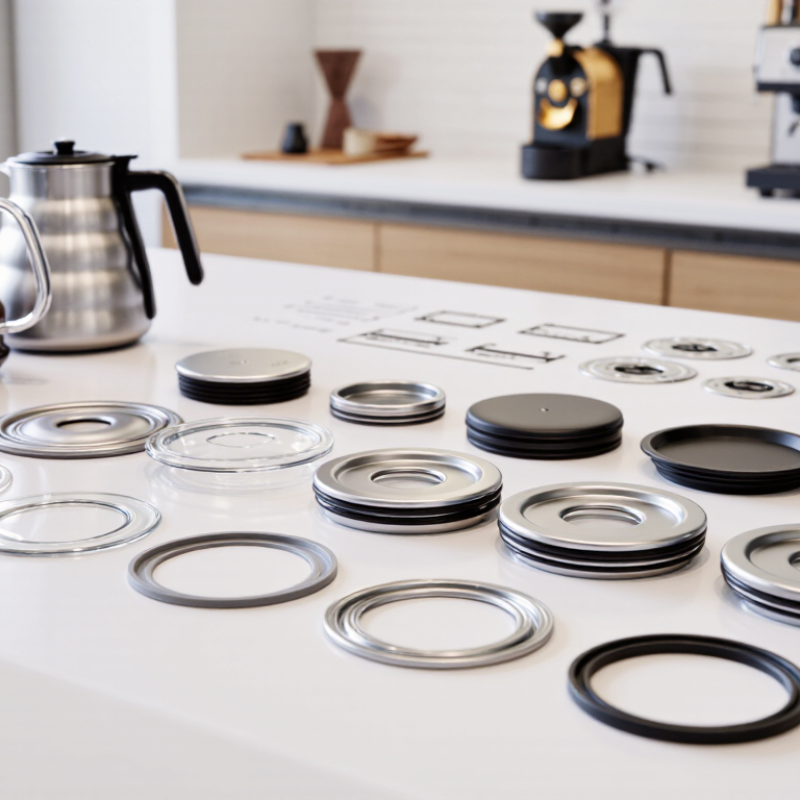
Top Coffee Pot Lids Manufacturers in China
Coffee Pot Lids: Types, Materials, and Functions
Coffee pot lids come in several practical designs. A hinged lid stays attached during pouring, while a removable lid makes filling and cleaning easier. Some models use a small vent to release steam; others have a close-fitting rim to help reduce heat loss and splashes. Small details matter. The lid should sit evenly, without wobbling, and open smoothly when the pot is hot. During product checks, inspect the hinge, rim, and any vent for rough edges or gaps. A lid that looks neat may still fit poorly.
Material affects weight, heat resistance, appearance, and care. Stainless steel is durable and resists everyday wear, but can become hot to touch. Heat-resistant plastics are lighter and allow more design options; their suitability depends on the intended temperature and use. Silicone may form a flexible rim or seal, helping the lid fit snugly. Glass offers a clear view of the contents, though it needs careful handling. Each material has trade-offs. A tight fit can limit spills, but the lid should not make pouring awkward or cleaning difficult. Check the lid alongside the pot, not alone. That is easy to overlook.
China’s coffee pot lid manufacturing industry combines tooling, materials expertise, and high-volume production. Factories may produce lids from stainless steel, heat-resistant plastics, glass, or silicone, depending on the pot design. A lid must sit securely while allowing practical pouring and cleaning. Small details matter. A slightly uneven rim can cause wobbling or let steam escape.
Production often begins with drawings and sample parts. Engineers check dimensions, handle attachment points, and the fit between lid and pot. Molding or stamping follows, with polishing and assembly added where needed. Quality checks can include repeated opening, closing, and fitting tests. Some buyers also request heat-cycle testing. The exact process varies by material and product requirements.
China’s supplier network can help manufacturers source components and coordinate production, but capability is not uniform across every factory. Buyers should review samples, inspection records, and stated material specifications rather than relying on catalog images alone. Fit is everything. Yet a perfect fit on one pot may fail on another. That trade-off deserves more attention during development, especially when a lid must work across several pot sizes.
Leading coffee pot lid manufacturers in China serve brands, roasters, and equipment makers that need dependable replacement or production components. Their work involves more than shaping a cover. A lid must fit the pot rim, control steam, and remain easy to lift during daily use. Small parts matter.
Experienced manufacturers typically offer several material options, including stainless steel, glass, and food-contact plastics. Buyers should ask how dimensions are checked and how samples are tested against the intended pot. A lid that looks neat on a workbench may rattle, leak, or loosen after repeated heating and washing. Fit is practical, not cosmetic.
Production strength also depends on clear communication. Request drawings, sample measurements, packaging details, and realistic lead times before placing a large order. Ask whether the supplier can keep dimensions consistent between batches. A polished sample is useful, but it cannot prove long-term performance by itself. No factory is perfect, and a missed detail can still happen. That is worth remembering. When comparing manufacturers, prioritize documented inspection methods and straightforward answers over broad promises. A careful supplier should explain limits as well as capabilities, especially when a design needs a custom rim or handle.
A practical guide to common coffee pot lid materials, manufacturing processes, and supplier verification points. This table describes product and compliance considerations, not the specifications of any individual manufacturer.
| Evaluation Dimension | Common Lid Material or Feature | Typical Manufacturing Process | Relevant Verification Point | Useful Buyer Question |
|---|---|---|---|---|
| Metal lid body | Food-contact stainless steel, commonly specified by grade such as 304 | Stamping or forming, followed by trimming and surface finishing | Check material identification, finish consistency, edge quality, and food-contact documentation applicable to stainless steel articles, including GB 4806.9-2023 where relevant | Can the supplier provide material records and the applicable food-contact test documentation for the finished part? |
| Transparent lid section | Borosilicate glass or another glass type selected for the product design | Glass forming, annealing, edge finishing, and dimensional inspection | Check for chips, cracks, visible defects, fit, and suitability for the intended temperature and use; request applicable food-contact documentation, including GB 4806.5-2016 where relevant | What glass specification and inspection criteria are used for the transparent section? |
| Plastic components | Polypropylene (PP) is commonly used for molded lid parts and handles | Injection molding, gate trimming, and dimensional inspection | Confirm the resin grade is suitable for the intended use and review relevant food-contact documentation, including GB 4806.7-2023 where applicable | Which resin grade is used, and how are color, dimensions, and molding defects controlled? |
| Seal or gasket | Food-contact silicone rubber may be used where a flexible seal is required | Compression or injection molding, curing, trimming, and visual inspection | Check fit, deformation, odor, and relevant food-contact documentation, including GB 4806.11-2023 where applicable | Can the supplier confirm the seal material and provide documentation for the finished gasket? |
| Forming and assembly | Multi-part construction may combine a metal or glass body with molded parts and a seal | Stamping, molding, finishing, and manual or automated assembly | Review assembly fit, alignment, retention, and any product-specific leak or function test results | What checks are performed after assembly, and how are results recorded by production lot? |
| Dimensional control | Lid diameter, rim profile, thickness, and feature positions depend on the matching pot design | Tooling setup followed by in-process and final measurement | Compare samples with the approved drawing and agreed tolerances; confirm compatibility with the intended pot opening | Will the supplier inspect against buyer-approved drawings and provide a dimensional report? |
| Surface and appearance | Finishes may include polished or brushed metal, colored molded parts, and clear glass | Polishing, brushing, coloring, cleaning, and visual sorting as applicable | Agree on acceptable limits for scratches, stains, burrs, color variation, and other visible defects before production | Does the supplier use an agreed visual-inspection standard and approved reference samples? |
| Supplier quality records | Records should correspond to the actual material, component, and finished-product configuration | Incoming inspection, in-process checks, final inspection, and document control | Verify that reports identify the tested material or product and are relevant to the intended market and use | Can the supplier share current test reports, inspection records, and traceability information for a production lot? |
Material choices and food-contact requirements depend on the complete product design, intended use, and destination market. Confirm current standards, test scope, and documentation with the supplier before placing an order.
China-based coffee-pot-lid manufacturers commonly use injection molding for polymer parts and stamping for metal components. Production checks may cover incoming material certificates, mold temperature, trimmed edges, gasket placement, and fit against the pot rim. Small defects matter. A slightly uneven sealing surface can lead to drips after repeated heating and washing.
Reliable control combines process records with practical testing. Manufacturers can use ISO 9001 quality-management systems and apply food-contact requirements relevant to each material and sales market. Checks may include migration testing, odor assessment, heat cycling, and repeated lid-opening trials. Requirements differ by destination; one test plan does not fit every resin or seal. Visual inspection helps, but it can miss fine cracks or inconsistent gasket compression.
For buyers, batch traceability and documented test results offer more useful evidence. Still, sampling has limits: a passing sample cannot guarantee every lid in a large shipment performs identically.
China’s coffee-pot lid suppliers should be compared on fit, material consistency, and production control—not catalog photos alone. The International Coffee Organization’s Coffee Report and Outlook (May 2024) estimated global coffee consumption at 177 million 60-kilogram bags in 2023/24, up 2.2% year over year. That demand is useful context, but it does not prove a lid supplier can meet your specifications.
Request drawings with dimensions, resin or metal grades, and stated tolerances. Then test samples on your actual pot rims. Check for wobble, steam escape, handle clearance, and deformation after repeated hot-water cycles. A polished sample can distract; that is an easy mistake to make.
Ask for inspection records, batch traceability, defect data, and written change-control procedures. Compare tooling ownership, minimum order quantities, lead times, and capacity against your forecast. Ask how the factory handles a failed batch, too.
Food-contact documents matter, but verify they match the exact material and intended use. A useful comparison sheet records the same tests for every supplier. Small gaps in test methods can distort the result. An on-site or third-party audit can help confirm whether documented controls match production reality.
