
Choosing the right Pallet Box manufacturer can affect product safety, warehouse efficiency, and international shipping costs. Global buyers need more than attractive prices. They need dependable materials, consistent dimensions, clear documentation, and responsive communication.
A strong manufacturer should demonstrate practical experience with export packaging, reusable handling systems, and demanding warehouse conditions. Look for production details such as reinforced corners, smooth internal surfaces, drainage options, and compatible forklift entries. A durable Pallet Box should protect goods during repeated loading, stacking, and movement. Ask about material grades, weight limits, cleaning procedures, and quality inspection records. Small details matter.
Not every supplier performs equally well. Some provide excellent prototypes but inconsistent mass production. Others offer competitive prices but limited after-sales support. That is why buyers should compare factory capabilities, sample results, lead times, and independent customer feedback. Site audits, technical drawings, and trial orders can reveal weaknesses early. Certifications may support credibility, but they should be verified rather than accepted blindly. No supplier is perfect. Even experienced manufacturers may need clearer specifications from the buyer.
This guide reviews leading Pallet Box manufacturers for global buyers. It focuses on manufacturing expertise, product reliability, customization, sustainability, and export readiness. The goal is practical decision-making, not exaggerated claims. A suitable partner should offer stable quality, transparent communication, and solutions matched to real handling conditions. Choose carefully.
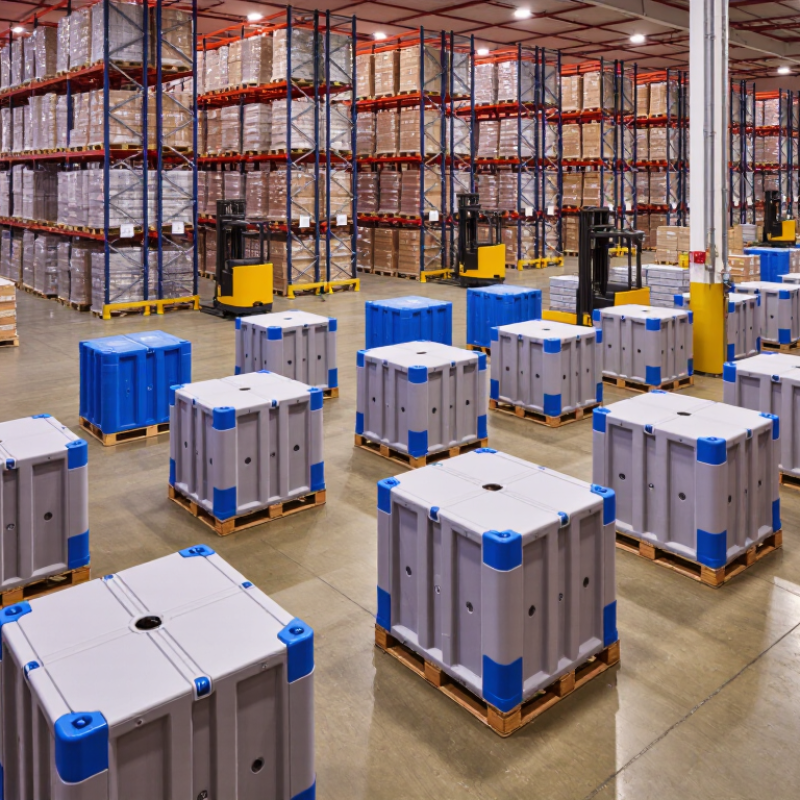
Pallet boxes combine a pallet base with rigid, collapsible, or removable walls. Common types include bulk bins, sleeve packs, nestable boxes, and foldable containers. Rigid plastic suits repeated washing and forklift handling. Corrugated fiberboard suits lighter loads and shorter cycles. Steel serves extreme loads, but its weight raises handling costs.
Material choice should follow the product, route, and return system. Eurostat reported 186.5 kilograms of packaging waste per person in the European Union in 2022. That figure makes reusable packaging more attractive, although reuse only works when return distances remain practical. The OECD’s Global Plastics Outlook also recorded 353 million tonnes of plastic waste worldwide in 2019. Recycled-content plastic can reduce virgin resin demand, but buyers should verify impact resistance and traceability.
Industrial uses vary widely. Food processors use washable plastic boxes for vegetables, meat, and chilled ingredients. Automotive plants use stackable containers for castings, fasteners, and interior parts. Chemical facilities often require sealed designs, though compatibility testing remains essential. ISO 8611 provides a recognized framework for pallet performance testing, including load capacity and deflection. A supplier’s brochure is not enough.
In practice, buyers should inspect corner posts, drain holes, lid fit, and forklift entry points. Small failures become expensive. I have seen specifications overlook empty-box storage, which can erase expected savings. Cost per purchase is useful, but cost per trip is better. Load stability, repair access, cleaning time, and reverse logistics deserve equal attention.
When evaluating global pallet box manufacturers, buyers should look beyond price and catalog photographs. Start with measurable specifications: internal dimensions, static load, dynamic load, stacking height, and temperature tolerance. Ask for test reports from recent production batches, not only standard laboratory examples. A box may look rigid but deform after repeated forklift handling.
Material selection also deserves close attention. Recycled plastic can support sustainability goals, yet its consistency may vary between batches. Request information about resin grades, additives, wall thickness, and color stability. Check whether surfaces are smooth, washable, and suitable for your operating environment. For food, pharmaceutical, or industrial applications, verify relevant quality controls and traceability records. Small details matter.
Reliable manufacturers explain how they control defects. During supplier evaluations, review mold maintenance, dimensional inspection, packing methods, and corrective-action records. Ask for samples and test them with your actual pallet pattern, load weight, and warehouse equipment. Communication is another practical measure. Can the supplier answer technical questions clearly and provide stable lead-time data? Can they support replacement parts or repairs?
No supplier is perfect. A polished brochure can still hide weak process control. Buyers should compare references, factory evidence, warranty terms, and export experience before making assumptions. I would also document every agreed specification, because informal promises often become difficult to verify later. A lower unit price may lose its advantage when damaged boxes create handling delays.
Key Criteria for Evaluating Global Pallet Box Manufacturers
The chart presents a practical 100-point procurement framework for comparing pallet box manufacturers without using company or brand data. Load performance, material durability, international logistics compatibility, hygiene compliance, customization, sustainability, and supply reliability are common evaluation dimensions for global buyers.
Evaluation weights are a neutral buyer-side benchmark and should be adjusted according to the application, destination market, and product-handling requirements.
Top Pallet Box Manufacturers for Global Buyers
Leading pallet box manufacturers serve industries that need stronger handling, cleaner storage, and dependable shipping protection. Experienced producers usually offer rigid plastic, foldable, and heavy-duty pallet boxes. Each design suits different warehouse conditions. Rigid models resist repeated impacts and keep their shape under stacked loads. Foldable versions reduce return-transport volume when empty. That difference can lower storage costs, though not always as much as sales teams suggest.
Reliable manufacturers focus on material consistency, load testing, and practical design details. Reinforced corners protect boxes during forklift movement. Smooth inner walls help workers remove packaged goods without snagging. Drainage holes may support washing, while sealed surfaces protect contents from dust and moisture. Some suppliers provide custom dimensions, labels, lids, and runners. Buyers should request test reports, sample units, and clear weight limits before placing large orders. Samples reveal weaknesses quickly.
Global buyers also need stable production and responsive technical support. Manufacturers with documented quality procedures can reduce variation between shipments. Food and pharmaceutical users may require traceable materials and easy-clean surfaces. Industrial users may value impact resistance more than appearance. A useful pallet box should remain practical after months of handling. It should not become difficult to repair or stack. Still, no design fits every supply chain. A box that performs well in a dry warehouse may disappoint in cold storage. Temperature, cleaning methods, stacking height, and transport distance deserve careful review.
| Supplier Profile | Main Pallet Box Material | Common Footprints | Typical External Dimensions | Typical Load Capacity | Product Strengths | Best-Fit Applications |
|---|---|---|---|---|---|---|
| Profile A | HDPE or PP molded plastic | 1,200 × 800 mm; 1,200 × 1,000 mm | 1,200 × 800 × 760–975 mm | Dynamic: 500–1,000 kg Static: 1,500–4,000 kg | High impact resistance, washable surfaces, reusable construction, optional lids and access doors | Automotive parts, food processing, distribution centers, reusable transport packaging |
| Profile B | Foldable HDPE or PP plastic | 1,200 × 800 mm; 1,200 × 1,000 mm | 1,200 × 800 × 580–975 mm | Dynamic: 500–800 kg Static: 1,500–3,000 kg | Space-saving return logistics, reduced empty-volume costs, integrated hinges and pallet base | Closed-loop supply chains, export packaging, warehouse transfers, retail distribution |
| Profile C | Heavy-duty corrugated fiberboard | 1,200 × 800 mm; 1,200 × 1,000 mm | Custom heights from 400–1,200 mm | Usually 300–800 kg, depending on board grade and stacking height | Low tare weight, recyclable paper-based structure, flat-pack shipping, easy customization | E-commerce, agricultural produce, consumer goods, one-way export shipments |
| Profile D | Rigid HDPE with reinforced ribs | 1,140 × 980 mm; 1,200 × 1,000 mm | 1,200 × 1,000 × 760–1,200 mm | Dynamic: 800–1,500 kg Static: up to 4,000 kg | Strong stacking performance, reinforced corners, long service life, compatible with forklifts and pallet trucks | Heavy automotive components, metal parts, machinery assemblies, industrial manufacturing |
| Profile E | Food-grade PP or HDPE | 1,200 × 800 mm; 1,200 × 1,000 mm | 1,200 × 800 × 800–1,000 mm | Dynamic: 500–1,000 kg Static: 2,000–3,000 kg | Smooth hygienic surfaces, moisture resistance, easy cleaning, optional drainage and ventilation openings | Fresh produce, meat and seafood, beverage logistics, food ingredient handling |
| Profile F | Plastic pallet box with steel reinforcement | 1,200 × 1,000 mm; 1,300 × 1,100 mm | 1,200 × 1,000 × 1,000–1,200 mm | Dynamic: 1,000–1,500 kg Static: 3,000–5,000 kg | High rigidity for dense loads, improved dimensional stability, secure stacking, reinforced base design | Heavy machinery, castings, industrial equipment, high-density components |
| Profile G | Conductive or static-dissipative plastic | 1,200 × 800 mm; 1,200 × 1,000 mm | 1,200 × 800 × 760–975 mm | Dynamic: 400–800 kg Static: 1,500–3,000 kg | ESD protection, reusable design, conductive lids and liners, compatibility with controlled production areas | Electronics, semiconductor components, battery manufacturing, precision engineering |
| Profile H | Export-grade plywood or treated timber | 1,200 × 800 mm; 1,200 × 1,000 mm; custom sizes | Custom dimensions, commonly 1,200 × 1,000 × 800–1,200 mm | Dynamic: 500–1,500 kg Static: 2,000–4,000 kg | High customization, strong impact protection, suitable for oversized or irregular products | Industrial exports, machinery, tooling, oversized parts and project cargo |
Note: Load capacities and dimensions are representative industry ranges. Actual performance depends on material grade, wall design, temperature, load distribution, stacking pattern and handling equipment.
Global pallet box manufacturers must satisfy more than basic dimensions and load ratings. Buyers should request documented tests for stacking, impact, vibration, and temperature changes. A box rated for 1,000 kilograms may perform differently after repeated warehouse cycles.
Look for suppliers operating under ISO 9001 quality management systems. ISO 14001 can indicate structured environmental controls, but it does not prove sustainable materials by itself. Plastic pallet boxes may require food-contact declarations, REACH compliance, or RoHS documentation, depending on their application and destination market. Wooden components may require ISPM 15 treatment and marking. Certification scope matters.
Export capability becomes visible in small details. Reliable manufacturers provide drawings in metric units, multilingual inspection records, consistent packaging, and clear container-loading plans. They should explain HS classification support without promising customs approval. Ask for batch traceability, pre-shipment photographs, and replacement procedures for damaged goods. A factory audit is useful. So is a sample order.
A polished certificate is not enough. In practice, documents can be current while production has changed. Verify certificate numbers, issuing bodies, test dates, and the exact product model. Request a trial shipment with corner protection and moisture control. It may feel slower, but it exposes weak packing, unclear communication, or unstable dimensions before a large export order.
The supplier should provide material specifications, dimensional tolerances, and recent compression or drop-test reports. Request samples before approving a full shipment. Check whether the box remains stable after repeated stacking, washing, and temperature changes.
Sustainability deserves careful verification. The OECD Global Plastics Outlook reports that global plastic waste reached 353 million tonnes in 2019, while only 9% was recycled. Therefore, ask about recycled content, product lifespan, and end-of-life collection. A supplier with ISO 9001-based quality controls may offer stronger traceability, but certification alone proves little.
Some buyers still overlook these details. That is an expensive lesson.
