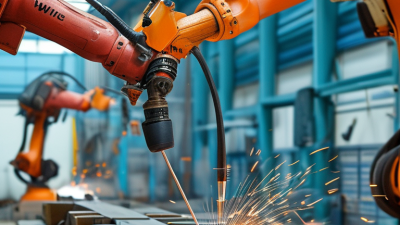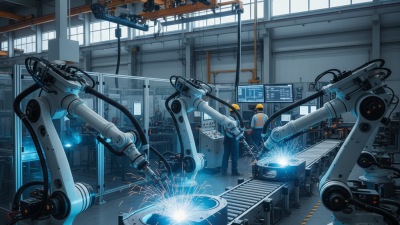
Choosing the right welding automation system starts with production reality, not a glossy equipment brochure. A cell that performs beautifully in a demonstration may struggle beside your actual fixtures, smoke extraction, operators, and material variation. Welding automation can improve repeatability, throughput, and workplace consistency, but only when its design matches the joint, process, and business objective.
Industry data shows why this decision deserves careful attention. The International Federation of Robotics reported 541,302 industrial robots installed worldwide in 2023 in its World Robotics 2024 report. Manufacturing remains highly automated, yet adoption is not evenly distributed across companies or regions. The International Federation of Robotics also identifies automotive and metal industries as important robot users, where welding tasks often demand stable arc control and repeatable positioning. Market research reports, including MarketsandMarkets’ welding equipment analyses, project continued growth in automated welding demand, driven by labor shortages, quality expectations, and production pressure. Forecasts vary, though. Treat them as directional evidence, not guaranteed returns.
A practical selection process should examine duty cycle, weld length, material thickness, joint access, fixture accuracy, and operator training. Watch the arc. Measure the rework. Ask whether a technician can diagnose a fault at 2 a.m. A robotic arm alone is not a complete solution. The power source, positioner, torch package, sensors, safety guarding, programming workflow, and maintenance support must work as one system. Experience also exposes uncomfortable gaps: automation may amplify poor fixturing or inconsistent parts. The best system is therefore not always the fastest one. It is the system that delivers reliable weld quality, measurable payback, and manageable daily operation.
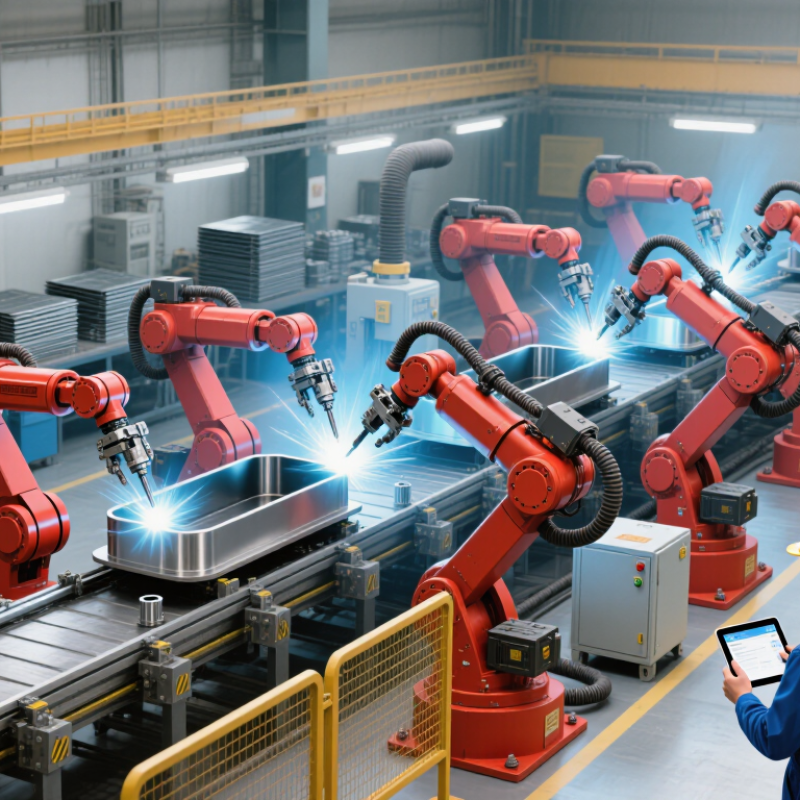
Before choosing a welding automation system, define the production target in measurable terms. Record daily output, weld length, material thickness, joint types, and acceptable defect rates. A workshop producing 80 frames per shift needs different equipment from one making five large pressure vessels.
Start with the weld itself. Identify the process, wire diameter, shielding gas, torch angle, position, and required penetration. Measure fixture repeatability and part variation. A robot may repeat a programmed path perfectly, but it cannot correct poor fit-up without suitable sensing. I have seen projects fail because engineers automated unstable fixtures. The robot was blamed. The preparation was the real problem.
Labor availability also affects the decision. The American Welding Society estimates that the United States may need 330,000 welding professionals by 2028. Automation can reduce repetitive exposure and support skilled workers, but it does not remove process knowledge. The International Federation of Robotics reported 541,302 industrial robots installed worldwide in 2023. That growth signals strong adoption, yet more robots do not guarantee better welds. Define cycle time, uptime, changeover limits, inspection methods, and operator training before requesting quotations. Include difficult realities, such as short production runs, reflective surfaces, or parts that arrive slightly warped. Those details often determine whether automation creates value or creates an expensive bottleneck.
Choosing the best welding automation system starts with comparing how each type handles production demands. Manual welding offers flexibility for prototypes, repairs, and irregular joints. It depends heavily on operator skill. Quality may vary during long shifts. Semi-automatic systems add powered wire feeding, positioners, or travel units. The welder still controls key movements. This option often suits changing products and moderate volumes.
Robotic welding systems deliver repeatable torch paths across stable, high-volume work. They need accurate fixtures, consistent parts, and trained programmers. A small fit-up error can repeat across hundreds of assemblies.
Fixed automation can move faster in dedicated production lines. However, it becomes expensive to change when product designs shift. Collaborative systems provide easier interaction and shorter setup times, but their speed and payload may limit heavy fabrication.
The right comparison should include weld length, joint access, material thickness, takt time, and floor space. Check how quickly operators can adjust programs. Ask whether spare parts and technical training are available locally. Safety features, extraction, guarding, and maintenance access require practical inspection. A trial weld reveals more than a sales chart. I have seen teams overvalue speed and underestimate fixture accuracy. That mistake is costly. Start with measurable samples, then compare defect rates, changeover time, and operator workload. The cheapest system is not always the least expensive choice. Sometimes, simpler equipment performs better.
Compatibility starts with the existing cell, not the catalog. Map robot reach, torch angle, fixture clearance, controller interfaces, power requirements, and communication protocols. Measure them on the actual floor. The International Federation of Robotics reported 541,302 industrial robots installed worldwide in 2023. This growth does not guarantee that a welding package will fit. Verify payload with the torch, cables, and sensors attached, not an empty-arm brochure value. Small errors become expensive.
Steel, aluminum, stainless steel, and galvanized surfaces require different current modes, shielding gases, wire feeding, and heat control. Check the power source waveform, feeder stability, torch cooling, and software recipes against the qualified welding procedure. AWS welding guidance emphasizes controlling essential variables during procedure qualification. Automation cannot correct an unsuitable joint design. Material thickness matters too. A 1.2-millimeter sheet may burn through, while a 12-millimeter joint remains underfilled. Run validation samples before production approval. Record spatter, porosity, distortion, and cycle time.
Energy compatibility deserves attention as well. The U.S. Department of Energy’s Industrial Decarbonization Roadmap identifies industry as responsible for roughly 30% of national energy use. Test duty cycle, standby consumption, compressed-air demand, and cooling requirements. A system may match the material but overload the plant’s utilities. That detail is easy to miss. I would also challenge optimistic cycle-time claims. Real fixtures collect dust, wire changes interrupt production, and operators need access. A short trial using real parts often reveals more than a polished demonstration.
A reliable welding automation system should make control decisions clear, not hide them behind complicated screens.
Operators need adjustable travel speed, current, voltage, wire feed, and cycle timing. These settings should be easy to read while wearing protective gloves. During a shop evaluation, ask an operator to create and adjust a welding program. Small delays matter. If the interface causes confusion, production quality may suffer.
Safety controls deserve equal attention.
Look for guarded moving parts, emergency stops, fault alerts, and clear maintenance access. The system should prevent unexpected movement during setup or servicing. It also needs useful records for alarms, inspections, and operator training.
I once saw a technically capable system fail a practical review because its warning light was difficult to notice in bright lighting. That detail changed my judgment.
Operator needs must guide the final choice.
Experienced welders may want deeper parameter control, while new users may need guided menus and locked settings. Training should include dry runs, fault recovery, and safe shutdown procedures. Ask whether operators can understand the system under pressure. They often reveal problems that specifications miss.
No checklist is perfect. Review feedback after installation, and be willing to adjust the workflow when real conditions expose weaknesses.
The purchase price is only the visible part of welding automation. Calculate total cost across five years. Include fixtures, programming, integration, safety upgrades, training, utilities, consumables, maintenance, and downtime. A system costing $180,000 may require another $45,000 before producing its first stable weld. That figure is easy to miss.
Use a simple ROI model: annual benefit equals labor savings, higher throughput, reduced rework, and avoided downtime. Subtract yearly service and operating costs. Divide the result by the complete investment. For example, $120,000 in annual benefits and $35,000 in operating costs produce $85,000 in net gain. Against a $225,000 investment, the simple payback is about 2.6 years.
It is useful, but not perfect. Demand may fall. Operators may need longer training than expected.
Industry data supports careful planning. The International Federation of Robotics reported 541,302 industrial robots installed worldwide in 2023, showing continued automation growth. Deloitte’s 2024 Smart Manufacturing and Operations Survey found that 92% of manufacturers viewed smart manufacturing as important for competitiveness. Growth alone does not guarantee profit. Ask for documented uptime, response times, spare-parts availability, software support, and training hours. Confirm who handles repairs at 2 a.m. A five-year support contract should define costs, service levels, upgrade policies, and technician access. Review those terms with maintenance staff, not only procurement. A cheaper system can become expensive when support is vague.