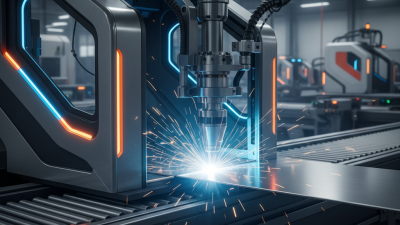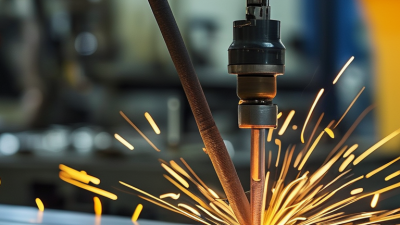
Choosing the right seam welder begins with the joint, not the machine catalogue. Your material, thickness, seam length, production volume, and required leak resistance should guide the decision. A stainless-steel tank may need stable heat control, while thin sheet panels demand low distortion and precise electrode pressure. Small details matter.
Industry data supports careful equipment selection. Grand View Research reported that the global welding equipment market reached approximately USD 15.6 billion in 2023. Its analysis also expects continued growth through 2030, driven by automation, infrastructure, and manufacturing investment. MarketsandMarkets has identified automated welding systems as a major growth area, especially where repeatability and labor efficiency influence operating costs. These reports use different research methods, so their figures should not be treated as exact purchasing forecasts. That limitation deserves attention.
A reliable seam welder should match your real production conditions. Review duty cycle, welding speed, cooling requirements, electrode design, control systems, and maintenance access. Ask suppliers for documented test results using your actual materials. Watch the weld during a trial run. Look for even penetration, limited discoloration, and consistent overlap from the first pass to the last. A machine can appear impressive yet perform poorly on your specific seam. That happens.
Experienced manufacturers also calculate total ownership cost, not only the purchase price. Energy use, replacement electrodes, downtime, operator training, and service response can change the final investment. Standards such as ISO 3834 can help structure quality requirements, but certification alone cannot replace practical testing. The best choice balances technical evidence, production reality, and room for future growth.
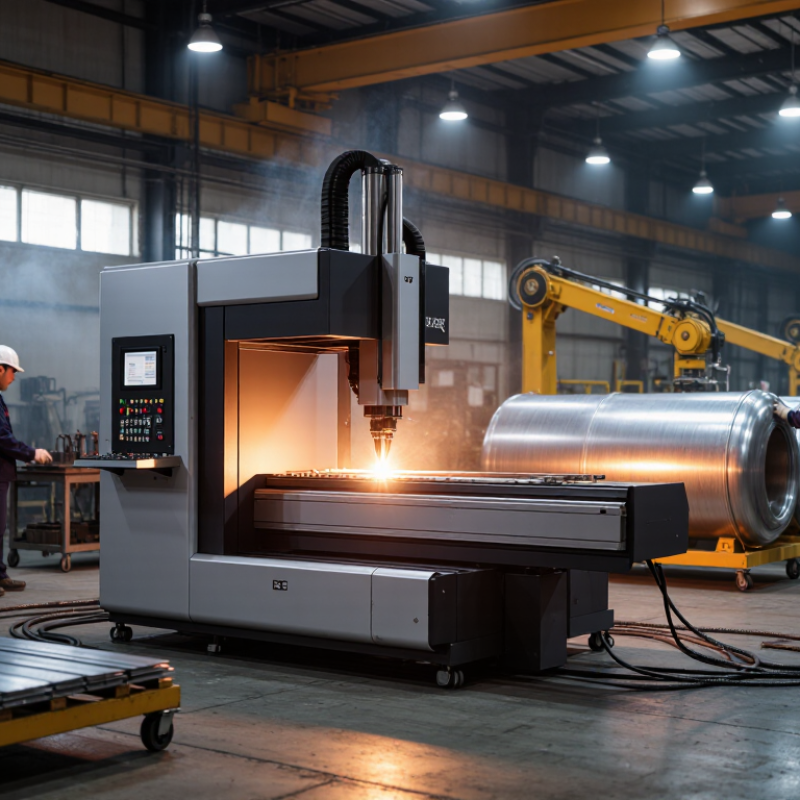
How to Choose the Right Seam Welder for Your Business?
Understanding seam welder types starts with their operating principles. Resistance seam welders use rotating copper-alloy wheels to apply pressure and electrical current. Heat forms overlapping weld nuggets along the joint. Intermittent current creates spaced nuggets, while continuous current produces a tighter seam. This method suits steel containers, tanks, and sheet-metal assemblies. It is fast and practical, but electrode wear can change weld quality.
Laser seam welders focus a high-energy beam on a narrow joint. The beam melts the edges with limited heat spread. This can reduce distortion on thin stainless steel or aluminum parts. However, joint fit-up must be precise. Laser systems also demand stronger process monitoring and operator training. They are not automatically better. Sometimes, they are simply more expensive.
Material volume should influence the decision. The World Steel Association reported 1.89 billion tonnes of crude steel production in 2023. That scale reflects strong demand for repeatable steel fabrication. Energy use also matters. The International Energy Agency’s Energy Efficiency 2023 report states that industry consumed about 37% of global final energy in 2022. A resistance machine may be more efficient for repeated short seams, while a laser can reduce rework and finishing. Compare current, pressure, travel speed, cooling, and maintenance records. A common mistake is trusting brochure speed alone. Real production includes loading time, alignment, inspection, and occasional failure.
Typical operating characteristics of common seam welding technologies
Resistance seam welding provides a practical balance of speed and thickness for overlapping sheet-metal joints. Laser seam welding offers high speed and narrow heat-affected zones, while TIG seam welding is slower but useful when precise control and clean weld appearance are required. The values shown are representative engineering ranges; actual performance depends on material, joint design, machine configuration, and production conditions.
Choosing a seam welder starts with the material, not the machine’s advertised speed. Stainless steel, galvanized steel, aluminum, and coated sheets transfer heat differently. Measure thickness, electrical resistance, coating condition, and allowable distortion. A practical trial with production samples is essential. Clean-looking welds can still hide weak fusion.
Joint design changes the decision. Overlap width, flange access, curvature, and leak requirements determine electrode shape and travel control. Continuous seams need stable pressure and cooling. Intermittent welds may reduce heat input, but they can weaken sealing performance. ISO 5817 quality levels help define acceptable imperfections, although the standard does not replace real testing. That part is often underestimated.
Production data should guide automation. The International Federation of Robotics reported 541,302 industrial robots installed worldwide in 2023, a 10% increase from the previous year. This growth reflects stronger demand for repeatable processes, not automatic proof that every shop needs robotics. Consider cycle time, shift length, operator skill, maintenance access, and future product changes. The American Welding Society estimates that more than 330,000 new welding professionals may be needed in the United States by 2028. Simple controls and clear parameter records therefore matter. Sometimes, a slower welder with better setup discipline wins. I have seen theoretical capacity fail when fixtures flex or cooling water warms. Test the joint at actual speed, pressure, and temperature before committing capital.
Choosing a seam welder starts with the joint, material, and production rhythm. Resistance seam welding suits overlapping sheets and repeatable cylindrical parts. It creates fast, continuous welds with controlled heat. Laser seam welding can produce narrow, precise joints, but it demands tighter fit-up and more advanced process control. For coated or reflective materials, testing is essential. A method that looks efficient on paper may perform poorly on your actual parts.
Capacity should match both today’s workload and realistic growth. Check maximum material thickness, welding width, wheel diameter, and available current. Duty cycle matters when the machine runs for long shifts. A small welder may handle samples well but overheat during continuous production. That mistake is easy to make. Measure your real cycle time, including loading, cooling, inspection, and adjustments.
Machine specifications deserve practical interpretation. Variable speed control helps when materials require different heat input. Water cooling can protect electrodes during demanding work. Digital monitoring improves repeatability, but operators still need training and clear inspection standards. Review transformer capacity, power requirements, control response, and replacement-part access. Ask for test welds using your own material and joint design. Do not trust ratings alone. I have seen buyers focus on peak current while ignoring setup time, which later reduced output. A careful trial may reveal an uncomfortable truth: the most powerful machine is not always the most suitable one.
Choosing the Right Seam Welder for Your Business
Automation should match your production rhythm, not simply your equipment budget. A high-output line may need programmable travel speed, automatic seam tracking, and repeatable pressure control. Smaller workshops often benefit from simpler controls and faster changeovers. During equipment trials, watch the operator’s hands. Can they adjust settings without stopping the entire line? That detail reveals practical usability.
Safety features deserve direct inspection. Look for guarded moving parts, emergency-stop controls, thermal protection, and clear status indicators. Interlocks should prevent operation when covers are open. However, safety systems cannot replace training or a site-specific risk assessment. Ask for documented testing procedures and maintenance records. A machine that looks safe may still create pinch points during setup.
Maintenance needs can quietly decide the true cost. Check whether rollers, electrodes, cables, and filters are easy to reach. A technician should not remove half the machine to replace one worn component. Request realistic service intervals, spare-part availability, and fault-code explanations. Keep a simple log for alignment, pressure, temperature, and unusual noise. I once underestimated setup time because the brochure showed ideal conditions. Real production included dust, hurried changeovers, and tired operators. That experience changed my evaluation process. I now test the welder after several continuous cycles, not just during a clean demonstration. The less glamorous details often matter most.
| Seam Welder Configuration | Typical Automation Level | Operator Involvement | Throughput Potential | Repeatability | Recommended Safety Features | Maintenance Needs and Best-Fit Use |
|---|---|---|---|---|---|---|
| Manual Bench Seam Welder | Low; welding current, speed, and workpiece movement are primarily controlled by the operator. | High. The operator loads, aligns, holds, and unloads each workpiece. | Low | 2/5 | Two-hand controls where applicable, emergency stop, electrode guarding, electrical grounding, and clear work-area access. | Daily cleaning of electrodes and fixtures; frequent alignment checks. Suitable for prototypes, repair work, low-volume production, and variable part sizes. |
| Semi-Automatic Seam Welder | Medium; programmed weld time and current may be combined with manual loading and unloading. | Medium. The operator positions parts and starts the cycle while the machine controls key welding parameters. | Low to medium | 3/5 | Emergency stop, guarded pinch points, weld-cycle interlock, electrode shields, foot-control protection, and thermal monitoring. | Clean and dress electrodes regularly; inspect cables, water lines, fixtures, and pneumatic components. Suitable for small-to-medium batch production. |
| Automatic Longitudinal Seam Welder | High; automated travel, clamping, welding sequence, and parameter control are commonly integrated. | Low to medium. Operators mainly load fixtures, verify settings, and monitor the process. | Medium to high | 4/5 | Fully guarded moving axes, door interlocks, emergency stops, light curtains where required, over-temperature protection, and fault alarms. | Inspect drive rails, clamps, electrode condition, cooling flow, and electrical connections. Suitable for repeatable straight seams on tanks, panels, and fabricated components. |
| Automatic Circumferential Seam Welder | High; rotation, clamping, welding current, and travel speed can be sequenced automatically. | Low to medium. Correct loading and accurate part seating are essential. | Medium to high | 4/5 | Rotary-motion guarding, chuck or fixture interlocks, emergency stop, anti-crush protection, over-current protection, and process alarms. | Check rotary bearings, chucks, contact surfaces, cooling circuits, and alignment. Suitable for cylindrical parts, drums, vessels, and circular seams. |
| CNC or Servo-Controlled Seam Welder | Very high; programmable motion and welding parameters support stored recipes and controlled production cycles. | Low during production, but skilled setup and process verification are required. | High | 5/5 | Enclosed work zone, access-door interlocks, light curtains, emergency stops, servo fault monitoring, over-temperature protection, and password-controlled settings. | Follow scheduled lubrication, calibration, cooling-system checks, software backups, and preventive electrical inspections. Suitable for high-volume production and strict quality requirements. |
| Robotic Seam-Welding Cell | Very high; robot motion, part handling, welding, inspection, and data collection can be integrated. | Low during operation; technicians handle programming, tooling, loading systems, and process validation. | Very high | 5/5 | Fixed perimeter guarding, safety-rated door switches, area scanners or light curtains, teach-mode controls, emergency stops, and robot-safe operating procedures. | Requires preventive maintenance for the robot, positioner, tooling, cables, cooling system, and safety circuits. Best for stable, high-volume products with consistent geometry. |
| Evaluation Dimension | What to Check | Higher Priority When | Practical Selection Guidance |
|---|---|---|---|
| Automation Requirement | Part volume, cycle-time target, loading method, recipe storage, data logging, and integration with upstream or downstream equipment. | Demand is growing, labor availability is limited, or production requires consistent cycle times. | Choose the lowest automation level that reliably meets the required output. Excess automation can increase setup, training, and service complexity. |
| Welded Material and Thickness | Material type, sheet thickness, coating, electrical resistance, seam length, and heat sensitivity. | Materials vary significantly or coated steels and corrosion-resistant alloys are used. | Confirm that the machine's current range, electrode geometry, force capacity, cooling system, and control strategy match the application through sample trials. |
| Seam Geometry | Straight or circular seam, part diameter, required overlap, access constraints, and fixture accuracy. | Parts have tight dimensional tolerances or complex shapes. | Prioritize a suitable travel axis, rotary positioner, clamping arrangement, and tooling repeatability before comparing control features. |
| Safety and Compliance | Guarding, interlocks, emergency stops, pinch-point protection, electrical safety, hot-surface protection, and risk assessment documentation. | Operators load parts manually, moving axes are exposed, or the machine is integrated into a larger production line. | Require a documented risk assessment and verify that safety functions are appropriate for the installation location and applicable local regulations. |
| Cooling and Utilities | Cooling-water quality and flow, compressed-air demand, electrical supply, ventilation, and heat dissipation. | High duty cycles, large welding currents, or continuous production are expected. | Size utilities for the complete duty cycle, not only the average cycle. Inadequate cooling can accelerate electrode wear and cause unstable weld quality. |
| Maintenance Capability | Access to spare parts, electrode replacement, lubrication points, calibration support, troubleshooting tools, and technician training. | Downtime is costly or the site has limited engineering support. | Compare preventive-maintenance requirements, service response, documentation quality, and the availability of locally supportable components. |
| Quality Control | Parameter monitoring, current and force feedback, weld-count tracking, alarm history, destructive testing, and visual inspection requirements. | Products are safety-critical, regulated, or subject to traceability requirements. | Prefer controls that record key welding parameters and provide clear alarms, while validating the process with an appropriate inspection plan. |
| Total Cost of Ownership | Purchase price, tooling, utilities, consumables, electrode life, labor, maintenance, training, and downtime. | The machine will operate for multiple shifts or production volumes may change over time. | Evaluate cost per acceptable welded part rather than equipment price alone. Include tooling changes, energy use, consumables, and expected service intervals. |
Maintenance intervals should always follow the equipment manufacturer's instructions, applicable workplace-safety requirements, and the actual duty cycle of the installation.
Choosing the right seam welder starts with the real cost, not the purchase price. A low-cost machine may appear attractive, but unstable power use, frequent adjustments, and rejected welds can quickly increase expenses. Check electrode life, maintenance intervals, spare-part availability, and operator training requirements. Ask for a clear ownership estimate over three to five years.
Quality must match your materials and production speed. Test the welder with your actual sheet thickness, joint design, and surface condition. Examine the weld bead under consistent lighting. It should look even, clean, and firmly bonded. Record current, pressure, speed, and cooling settings during the trial. Small records matter. A machine that performs well once may still struggle during an eight-hour shift.
Support is often overlooked until production stops. Confirm response times, remote troubleshooting, technician coverage, and training options before signing an order. Speak with users who run similar volumes, not only sales representatives. In my experience, practical guidance can prevent weeks of avoidable downtime. Still, no supplier can replace good internal maintenance. Review your own process honestly. If operators lack training or inspection tools, even excellent equipment may deliver inconsistent results.