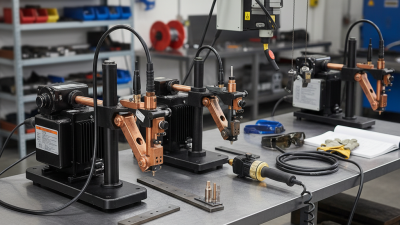
Choosing a portable spot welder in 2026 is not simply a matter of buying the smallest machine. Real performance depends on material thickness, electrode pressure, pulse control, battery capacity, and duty cycle. A tool that feels powerful on a thin steel sheet may struggle with coated metal or repeated production work. The right choice must match the job, not the advertisement.
Dr. Sindo Kou, a respected welding-metallurgy authority, describes welding as “a process of joining materials by coalescence.” That principle remains practical when comparing a portable spot welder. A stable weld needs controlled heat, consistent contact, and suitable current. Look for adjustable welding time, replaceable electrodes, clear power specifications, and protection against overheating. A compact 12-volt unit may suit light repairs, while thicker automotive panels usually demand stronger output and better cooling. Battery models also require honest attention to recharge time and performance decline in cold workshops.
Small details matter.
Before buying, test sample pieces from the same material used in your project. Check the weld nugget, surface marking, cable temperature, and repeatability after ten or twenty welds. I would not trust a bright product page alone. Some specifications appear impressive but omit actual output under load. That omission deserves scrutiny. Even experienced users can choose poorly when portability becomes more important than electrode force. This guide examines the practical trade-offs, helping you select a portable spot welder that is safer, more durable, and genuinely suitable for 2026 work.
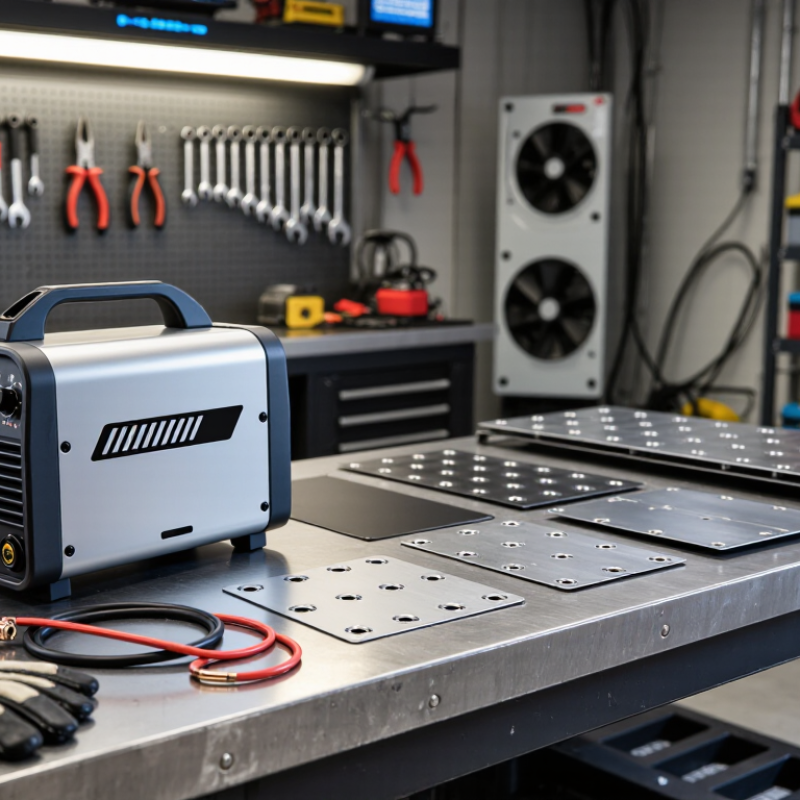
Choosing a portable spot welder starts with understanding its working basics. It joins metal by pressing electrodes against a strip and delivering controlled electrical pulses. Current, pulse duration, electrode pressure, and cooling time affect weld strength. A compact unit should offer adjustable settings, stable pressure, and clear feedback. Peak current alone can mislead buyers. I learned that hard-to-control pressure often causes weaker joints than lower power.
The application matters. Battery pack assembly commonly uses nickel strips, while thin sheet metal requires different electrode tips and pulse control. The International Energy Agency’s Global EV Outlook 2025 reports that electric vehicle battery demand reached about 1 TWh in 2024. That growth increases demand for reliable cell interconnections and repair equipment. Portable welders also support laboratory prototypes, appliance maintenance, and small fabrication tasks. They are not universal tools. Copper, aluminum, and coated metals may require specialized settings or equipment.
Tips: Match the welder to strip thickness and material before comparing price. Check pulse repeatability, electrode alignment, ventilation, and thermal protection. Keep test coupons nearby. Make several trial welds, then inspect the strip’s tear pattern instead of trusting appearance. Follow relevant electrical and battery safety procedures, including guidance from IEC 62133-2 where applicable. I still find visual inspection insufficient; destructive testing gives better confidence, especially when building repeated assemblies.
Portable spot welders are selected mainly by material type, sheet thickness, electrode access, duty cycle, and power requirements. The chart shows representative thickness ranges commonly encountered in portable resistance spot-welding applications.
Use the upper end of each range only when the welder has sufficient current, electrode force, cooling, and access for the joint design. Battery tabs and thin electronic materials require precise low-energy control, while automotive and appliance panels generally require higher current and stronger electrode pressure.
Essential Specifications for Comparing Welder Models
Choosing a portable spot welder starts with the workpiece, not the advertised power. Measure the metal thickness and identify its type before comparing models. Nickel strips, thin steel, and coated materials can require different pulse settings. A useful machine should offer adjustable welding current and pulse duration. Fixed settings may look simple, but they often limit control on delicate assemblies.
Small details matter.
Check the maximum practical thickness, not only the laboratory rating. Ask whether that rating applies to one pulse or repeated welds. A duty cycle shows how long the welder can operate before cooling.
Battery capacity also matters during field work. Look for voltage, amp-hour capacity, charging time, and replaceable battery options. Keep the unit stable. A heavy cable or weak clamp can reduce electrode pressure and create inconsistent welds.
Electrode force deserves attention because current alone does not guarantee a strong joint.
During testing, inspect pulse repeatability, control response, and weld marks under identical conditions. The electrodes should contact evenly without excessive sparking or deep indentations. Built-in temperature protection is valuable near continuous operation. Clear displays help users adjust settings without guessing.
Test it cold. Then test it after ten welds.
I once focused too heavily on peak current and overlooked cable flexibility, which made bench work awkward. That mistake changed how I compare portability. A compact case is useful, but balanced weight and comfortable handling matter more than a smaller number on the specification sheet.
How to Choose a Portable Spot Welder in 2026?
How to Match Welding Power with Material and Thickness
A portable spot welder must match the material, thickness, and joint design. Do not choose power from thickness alone. Two 0.5 mm sheets may need different settings. Mild steel usually transfers heat more easily than stainless steel. Copper alloys demand far more current and tighter control. I learned this after several weak joints looked acceptable from the outside.
Set power by the total stack thickness. A thicker stack needs more current, a longer pulse, or both. However, excessive energy can burn holes, create deep electrode marks, or weaken thin sheets. Start with short test pieces from the actual material. Inspect the weld nugget after tearing the sample apart. A sound nugget should resist separation, not simply leave a shiny surface.
Tips: Check the welder’s duty cycle, cable length, electrode condition, and pressure system. Keep contact surfaces clean and aligned. Use the lowest setting that produces consistent nuggets across several tests. Record each setting. This seems slow. It prevents guessing later. Material coatings also change results, so remove only what the joint specification allows. If the machine struggles on thicker steel, do not compensate endlessly with longer pulses. The power source may simply be undersized.
How to Choose a Portable Spot Welder in 2026?
Battery performance decides whether a portable spot welder feels dependable or frustrating. The IEA’s Global EV Outlook 2024 reported that global electric-vehicle battery demand exceeded 750 GWh in 2023. That scale reflects higher expectations for stable current delivery. Choose a unit with a clearly stated peak current, cycle count, and battery capacity. A large capacity number alone means little. Check whether the battery maintains power after repeated welds. It should also include overcharge, over-discharge, and temperature protection. I would leave extra capacity for cold workshops and aging cells.
Electrode design deserves equal attention. Copper electrodes with firm, adjustable pressure usually create cleaner welds on nickel strips. Confirm the working range before buying. A welder designed for thin strips may struggle with thicker material. Replaceable tips are practical, but their alignment must remain stable. Test settings on scrap metal first. My checklist is not perfect; strip thickness, cell surface, and pressure still change results.
Safety features should be visible, not hidden in vague product language. Look for thermal cutoff, short-circuit protection, insulated handles, a guarded trigger, and clear pulse controls. IEC 62133-2 addresses safety requirements for portable sealed secondary cells and batteries, so documented compliance is worth checking. BloombergNEF’s 2024 Battery Price Survey reported a 20% decline in average lithium-ion pack prices, reaching 115 dollars per kWh. Lower costs should not encourage careless battery handling. Keep damaged cells away from testing, use eye protection, and stop when electrodes become unusually hot. Candor matters: no portable welder removes every risk.
| Evaluation Dimension | Practical Range or Feature to Look For | Why It Matters | Recommended Choice for Most Users |
|---|---|---|---|
| Battery Chemistry | Rechargeable lithium-ion battery pack; protected cells with a battery-management system | Lithium-ion packs provide high energy density and can deliver the short, high-current pulses required for spot welding. | Choose a protected pack with documented cell specifications and replaceable or serviceable battery modules where possible. |
| Battery Voltage | Approximately 12–16.8 V for common portable designs, depending on cell configuration and charge level | Higher pack voltage can help the welder maintain power during rapid pulses, but voltage alone does not determine welding quality. | Prioritize stable pulse performance, current delivery, and protection circuitry over the highest advertised voltage. |
| Battery Capacity | Roughly 2–6 Ah for compact handheld units; capacity should be stated in ampere-hours and watt-hours | A larger capacity generally allows more welds between charges, although pulse current, material thickness, and cooling also affect endurance. | Select at least 3 Ah for regular field use, while confirming the manufacturer’s tested weld-count rating. |
| Battery Protection | Overcharge, over-discharge, overcurrent, short-circuit, and over-temperature protection | These controls reduce the risk of cell damage, thermal events, and unsafe operation during high-current pulses. | Do not choose a portable welder without a clearly documented battery-management system. |
| Peak Welding Current | Approximately 600–2,000 A advertised peak current, with test conditions clearly stated | Spot welding requires high current for a very short time. Advertised peak values are not directly comparable unless pulse duration and test setup are disclosed. | Compare real weld results and supported material thickness instead of relying on peak amperage alone. |
| Suitable Material Thickness | Common portable units are intended for nickel strip and thin sheet, often about 0.05–0.20 mm nickel strip | Actual performance depends on nickel purity, strip width, contact pressure, surface condition, and battery condition. | Choose a unit whose independently tested range covers the exact strip thickness and material you plan to weld. |
| Electrode Material | Copper or copper alloy electrodes, commonly copper-chromium-zirconium for improved wear resistance | Copper conducts heat and electricity efficiently; alloyed tips can retain their shape better during repeated welding. | Use replaceable, cleanable electrodes with a stable tip shape and secure electrical connections. |
| Electrode Tip Shape | Flat, rounded, or pointed tips; the contact area should match the strip width and joint geometry | Tip geometry controls current density and affects weld consistency, indentation, and heat concentration. | Select interchangeable tips and keep them clean, aligned, and free from excessive oxidation. |
| Pulse Duration | Adjustable millisecond-level pulses, commonly from about 1–20 ms per pulse | Pulse duration must be matched to strip thickness and cell surface condition to achieve adequate bonding without excessive heating. | Choose independently adjustable pulse energy or duration rather than a fixed single setting. |
| Single, Double, or Multi-Pulse Control | Selectable single-pulse and dual-pulse modes with adjustable interval or energy | A pre-pulse can improve contact, while a main pulse creates the weld; multi-pulse settings can help manage heat. | Use a unit with repeatable, clearly displayed pulse settings and memory for common materials. |
| Weld Force and Electrode Alignment | Firm, even manual pressure or an adjustable arm with consistent electrode travel | Inconsistent pressure changes contact resistance and can cause weak welds, excessive spatter, or surface damage. | Prefer a rigid arm, balanced handle, and visible alignment system for repeatable placement. |
| Cooling and Duty Cycle | Temperature monitoring, thermal cut-off, ventilation, and a stated duty cycle | Repeated high-current pulses generate heat in the battery, cables, electrodes, and switching components. | Choose thermal protection and follow the specified rest periods instead of welding continuously. |
| User Safety Features | Insulated grips, guarded terminals, trigger lock, accidental-fire prevention, and status indicators | These features help prevent unintended pulses, electric contact, and misuse during transport or setup. | Require a clear trigger, visible charge and fault indicators, and a lock or standby mode. |
| Cell Compatibility | Designed for the intended cell size and chemistry, such as cylindrical lithium-ion cells; verify maximum cell diameter and layout | Different cells require different strip dimensions, spacing, insulation, and welding energy. | Confirm compatibility with the exact cells and nickel strip before purchase or assembly. |
| Portability | Typically under 3 kg for a handheld battery-powered unit, excluding accessories | Lower weight improves field use, but extremely light construction may indicate smaller cooling capacity or less robust electrodes. | Balance weight, battery capacity, arm rigidity, and thermal performance rather than choosing the lightest unit. |
| Charging and Maintenance | Protected charger, charge-status indication, accessible electrode replacement, and cleaning instructions | Correct charging and routine tip maintenance improve battery life, contact quality, and long-term reliability. | Choose a unit with a certified charger, replaceable wear parts, and documented maintenance procedures. |
Note: Performance ranges are typical evaluation guidelines for portable spot welders. Always verify the exact operating limits, tested materials, battery instructions, and safety requirements in the product documentation.
How to Choose a Portable Spot Welder in 2026?
Use this step-by-step checklist before buying.
Material & Joint Thickness
Start with the material and joint thickness. Check the welder’s rated thickness for your actual metals, not its maximum advertising figure. A 2024 Grand View Research analysis estimated the global welding equipment market at about USD 15.6 billion in 2023. More products do not mean better selection. Review peak current, pulse duration, and duty cycle. For battery tabs, stable low-voltage control matters more than extreme power. For sheet steel, electrode force and arm clearance matter greatly. Write down your smallest and largest workpieces.
More products do not mean better selection.
Portability & Control
Check portability honestly. Record the tool’s weight, cable length, battery capacity, and recharge time. A unit that weighs 12 kilograms may feel portable on paper, but not on a ladder. Verify whether its controls show current, pulse time, and fault codes. Digital settings reduce guesswork, though displays can still mislead. Test sample welds and inspect nugget size under consistent conditions. AWS D8.9 provides recommended procedures for evaluating resistance weld quality. Keep that document nearby.
Heat Management & Service Access
Do not ignore heat management or service access. Ask for duty-cycle data at your intended current. Cooling claims need careful reading. OSHA’s welding guidance also emphasizes ventilation, eye protection, and fire prevention. The U.S. Bureau of Labor Statistics counted roughly 418,000 welding-related jobs in 2023, showing how widely these tools support practical work. Still, a market statistic cannot choose your machine. My checklist would include one uncomfortable question: can you repair or calibrate it locally? If not, portability may become an expensive illusion.
Can you repair or calibrate it locally?
If not, portability may become an expensive illusion.