Top 10 Air Cooled Water Chiller Manufacturers Worldwide

The global air cooled water chiller market is becoming more competitive, driven by data centers, hospitals, commercial buildings, and process cooling. Grand View Research estimates that the global chillers market will continue expanding through 2030, supported by urbanization and stricter energy-efficiency expectations. MarketsandMarkets also identifies air-cooled systems as a practical choice where cooling-tower water is limited.

The reasons are visible on-site. A rooftop unit can cool a hotel without cooling towers, condenser-water pumps, or complex water treatment. Maintenance teams often value that simplicity. However, outdoor coils collect dust, pollen, and salt. Performance can decline quietly during hot afternoons. That detail matters.

As HVAC engineer and author Ross Montgomery observed, “The best HVAC system is the one that is properly designed, installed, and maintained.” This principle applies directly to every air cooled water chiller reviewed in this guide. Manufacturer reputation alone cannot guarantee low operating costs. Selection must consider full-load efficiency, part-load performance, refrigerant compliance, sound levels, controls, service coverage, and climate conditions.

This Top 10 comparison examines leading air cooled water chiller manufacturers worldwide through a practical lens. It considers published technical data, certification evidence, product range, installation experience, and after-sales support. Some market reports use different definitions, so rankings should not be treated as absolute. Data can disagree. Real projects can expose weaknesses that brochures hide. The strongest manufacturers combine efficient compressors, intelligent controls, corrosion-resistant coils, and dependable global service. That combination matters most.
Top 10 Air Cooled Water Chiller Manufacturers Worldwide

What Is an Air-Cooled Water Chiller?

What Is an Air-Cooled Water Chiller?

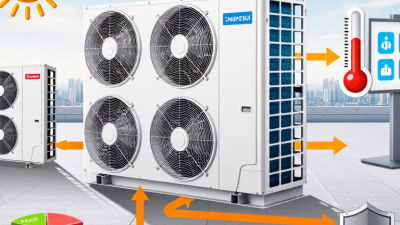
An air-cooled water chiller removes heat from circulating water. It uses a compressor, condenser coils, expansion device, and evaporator. Fans move outdoor air across the condenser coils. The cooled water then serves air handlers, process equipment, or server rooms. Unlike water-cooled systems, it does not require cooling towers or condenser-water pumps. This simplifies installation, especially where water availability is limited.

The International Energy Agency reports that cooling already represents about 10% of global electricity consumption. Its Future of Cooling report also warns that cooling demand could triple by 2050. These figures make chiller efficiency increasingly important. Air-cooled units usually need less maintenance, but hot weather can reduce their capacity. Dusty coils create another practical problem. In my experience, poor airflow often causes avoidable energy losses. That detail is easy to overlook.

Tips: Check the unit’s full-load and part-load efficiency ratings. Review AHRI 550/590 test data before comparing models. Keep condenser coils clean and maintain clear airflow around the equipment. Oversizing is not always safer; it may increase cycling and operating costs. Local climate data should influence the final selection. A laboratory rating cannot fully represent every rooftop or factory condition.

How Air-Cooled Water Chillers Work

Top 10 Air Cooled Water Chiller Manufacturers Worldwide

How Air-Cooled Water Chillers Work

An air-cooled water chiller removes heat from circulating water through a closed refrigeration cycle. The pump sends warm return water into the evaporator. Refrigerant absorbs its heat, then changes from liquid to vapor. The compressor raises the vapor’s pressure and temperature. Outdoor fans push air across condenser coils, releasing heat into the atmosphere. The refrigerant condenses and returns through an expansion device. The cycle repeats.

The process is practical, but not effortless. Condenser fins collect dust, pollen, and cottonwood fluff. Blocked airflow increases condensing pressure and power demand. Regular coil cleaning matters. So does correct water flow. A small flow imbalance can create unstable leaving-water temperatures.

The International Energy Agency’s The Future of Cooling report states that cooling accounts for about 10% of global electricity use. It also projects that space-cooling demand could more than triple by 2050 without stronger efficiency measures. ASHRAE’s HVAC Systems and Equipment guidance emphasizes accurate load calculations, airflow, refrigerant control, and part-load performance. These details often matter more than headline cooling capacity.

In field practice, an oversized chiller may short-cycle during mild weather. That wastes energy and can shorten compressor life. Variable-speed fans and multiple compressor circuits usually improve control. Still, real performance depends on ambient temperature, maintenance, water quality, and installation. Published ratings are useful, but they are not the whole story.

Criteria for Evaluating Global Chiller Manufacturers

Ranking the top ten air-cooled water chiller manufacturers requires more than catalogue capacity. Buyers should compare tested efficiency, controls, reliability, and service reach under identical conditions. The IEA’s The Future of Cooling report (2018) states that cooling consumes about 10% of global electricity today. It also projects cooling demand could more than triple by 2050. This makes part-load performance and refrigerant planning essential evaluation criteria.

Independent verification matters. Ask for results aligned with AHRI Standard 550/590 or ISO 5151, including cooling capacity, entering air temperature, and sound levels. A strong manufacturer should provide clear seasonal efficiency data, not only a best-case rating. ASHRAE Standard 90.1-2022 also supports a practical focus on minimum efficiency and control requirements.

Warranty response times, spare-parts availability, and technician coverage reveal operational maturity. Small details matter. A five-minute restart delay can affect a sensitive production area.

Tips: Build a weighted scorecard before contacting suppliers. Give efficiency, lifecycle cost, testing, and service each a fixed percentage. Visit one operating installation if possible. Listen for inconsistent compressor noise. Review maintenance records, not just brochures. No ranking is perfectly objective. Local climate, water temperature, electrical tariffs, and workload can change the result. An apparently efficient unit may perform poorly when poorly sized or frequently cycling.

Top 10 Air-Cooled Water Chiller Manufacturers Worldwide

Top 10 Air-Cooled Water Chiller Manufacturers Worldwide

The top ten air-cooled water chiller manufacturers worldwide are often judged by measurable performance, not advertising language. A reliable manufacturer should provide clear cooling-capacity data, seasonal efficiency ratings, sound levels, and operating limits. These details matter in factories, hotels, hospitals, and commercial buildings where outdoor temperatures can exceed 35°C.

Field experience matters. During commissioning, technicians check chilled-water flow, compressor cycling, condenser cleanliness, and leaving-water temperature. A strong manufacturer supports these steps with accessible manuals, responsive service teams, and readily available replacement parts. Units should also include dependable controls, corrosion-resistant coils, and low-GWP refrigerant options where suitable. Poor documentation can turn a minor sensor fault into several hours of downtime.

Numbers can mislead. A high rated capacity may not reflect performance at part load or in dusty environments. My evaluation would compare tested efficiency, warranty terms, factory quality procedures, and long-term maintenance costs. I would also examine whether the manufacturer adapts equipment for regional voltage, climate, and installation conditions. No list is flawless; pricing and local service can change the practical ranking. Still, manufacturers that combine stable operation, honest specifications, and experienced technical support usually deserve serious attention.

Top 10 Air Cooled Water Chiller Manufacturers Worldwide

Rank Primary Operating Region Typical Cooling Capacity Common Compressor Configuration Common Refrigerant Options Typical Leaving-Water Temperature Typical Applications Common Compliance Features
1 North America Approximately 20–1,500 refrigeration tons Scroll, screw, or variable-speed screw R-410A, R-134a alternatives, and lower-GWP HFO blends 4–12°C Commercial buildings, healthcare, data centers, and process cooling ASHRAE-based design, AHRI performance testing, and low-ambient controls
2 Western Europe Approximately 15–1,200 refrigeration tons Scroll, screw, and inverter-driven scroll R-32, R-513A, R-1234ze, and other lower-GWP refrigerants 5–14°C Office buildings, retail, hotels, industrial plants, and district systems CE marking, Ecodesign requirements, Eurovent data, and variable-speed fans
3 East Asia Approximately 10–1,000 refrigeration tons Scroll, rotary screw, or modular scroll R-410A, R-32, R-134a alternatives, and HFO blends 5–15°C Electronics manufacturing, commercial HVAC, laboratories, and process lines High-efficiency fan motors, microprocessor control, and corrosion-resistant coils
4 Greater China Approximately 5–800 refrigeration tons Scroll, screw, and modular parallel compressors R-410A, R-32, R-134a alternatives, and R-513A 5–15°C Factories, cleanrooms, hotels, hospitals, and commercial facilities ISO 9001 manufacturing systems, PLC controls, and optional hydronic modules
5 Northern Europe Approximately 20–700 refrigeration tons Inverter scroll, screw, and free-cooling configurations R-32, R-454B, R-513A, and R-1234ze 6–14°C Sustainable buildings, offices, universities, and industrial processes Free cooling, heat recovery, seasonal efficiency optimization, and low-noise design
6 Japan and South Korea Approximately 5–600 refrigeration tons High-efficiency scroll and inverter screw R-32, R-410A, R-134a alternatives, and HFO blends 5–15°C Precision manufacturing, semiconductor facilities, offices, and retail Compact footprint, inverter capacity control, advanced diagnostics, and low vibration
7 Southeast Asia Approximately 5–500 refrigeration tons Scroll and fixed-speed screw R-410A, R-32, R-134a alternatives, and R-513A 6–15°C Shopping centers, hotels, food processing, and light manufacturing High-ambient operation, tropical coil coatings, remote monitoring, and modular design
8 Middle East Approximately 20–1,000 refrigeration tons Screw and heavy-duty scroll R-134a alternatives, R-410A, R-513A, and lower-GWP HFO blends 6–15°C Large commercial buildings, district cooling, hospitals, and industrial sites High-ambient selections, sand-resistant condensers, redundancy, and remote supervision
9 Australia and Oceania Approximately 10–600 refrigeration tons Scroll, screw, and variable-speed compressor systems R-32, R-410A, R-513A, and R-1234ze 5–14°C Commercial HVAC, mining support, food production, and industrial cooling Outdoor-rated controls, high-efficiency fans, corrosion protection, and service access
10 India and South Asia Approximately 5–800 refrigeration tons Scroll, screw, and multi-compressor systems R-410A, R-32, R-134a alternatives, and R-513A 6–15°C Pharmaceuticals, textiles, commercial buildings, and process industries High-ambient performance, galvanized or coated coils, BMS connectivity, and modular options
Data note: The table presents anonymized, representative specifications and market characteristics commonly published for air-cooled water chiller product categories. Actual capacity, refrigerant, efficiency, operating limits, and certification depend on the selected model and local regulations.

How to Compare Chillers for Different Applications

Comparing air-cooled water chillers starts with the application, not the catalogue price. In a small office, a compact unit may provide adequate comfort with simple controls. A food-processing room demands steadier leaving-water temperatures and careful material selection. A data room is less forgiving. Its cooling load can remain high at night. Field evaluations often show failures caused by comparing rated capacity alone. That number is incomplete.

Use identical test conditions when comparing the top manufacturers worldwide. Check entering and leaving water temperatures, outdoor temperature, glycol concentration, altitude, and part-load performance. Air-cooled chillers lose efficiency as ambient heat rises. Ask for verified data at your actual design conditions. Not a polished estimate. Examine seasonal efficiency, sound levels, footprint, and service clearance. A unit may fit the plant room but create unacceptable noise beside occupied offices.

Reliability also depends on component design and maintenance access. Compare compressor staging, fan control, heat-exchanger construction, filtration, and control-system alarms. For hospitals or process lines, built-in redundancy may justify a higher purchase cost. For a small commercial building, that feature could be excessive. Installation details matter too, including airflow around coils and protection from dust. One weakness in many comparisons is ignoring local service capability. Even an efficient chiller becomes a poor choice when technicians cannot reach filters, sensors, or electrical panels quickly. I would challenge every assumption twice.

Top 10 Air-Cooled Water Chiller Manufacturers Worldwide — How to Compare Chillers for Different Applications

The chart shows indicative cooling-capacity ranges commonly encountered in air-cooled chiller applications. Commercial buildings generally prioritize seasonal efficiency and low noise, while data centers require redundancy and continuous operation. Process, healthcare, and food-production systems often require tighter temperature control, corrosion resistance, and reliable operation under varying loads. Final selection should also consider ambient temperature, leaving-water temperature, refrigerant requirements, footprint, controls, and lifecycle cost.