Choosing among the top 10 water chiller machine manufacturers in 2026 takes more than comparing price tags. A chiller may run for thousands of hours each year. Small differences in part-load efficiency, service access, and controls can affect operating costs and production schedules.
Look beyond the headline cooling capacity. Check the unit’s performance at your actual entering-water temperature, ambient conditions, and load profile. Ask how the manufacturer verifies efficiency, supports commissioning, and supplies replacement parts. A clear answer matters. So does a local service team that can respond when a pump trips or a condenser needs cleaning.
Professor Savvas Tassou of Brunel University London is a recognized researcher in refrigeration and sustainable energy systems. A useful takeaway from his published work is that refrigeration performance should be judged alongside energy use and environmental impact. This is a paraphrase, not a verbatim quotation. It offers a practical lens for comparing manufacturers, rather than a substitute for product-specific test data.
There is no universal winner. A food-processing plant, a data center, and a plastics factory may need very different designs. Some buyers may also overlook maintenance access; that is easy to regret later. This guide compares manufacturers through application fit, efficiency evidence, product range, support, and reliability. Use it as a starting point, then verify every specification with the supplier.
What Is a Water Chiller Machine and How Does It Work?
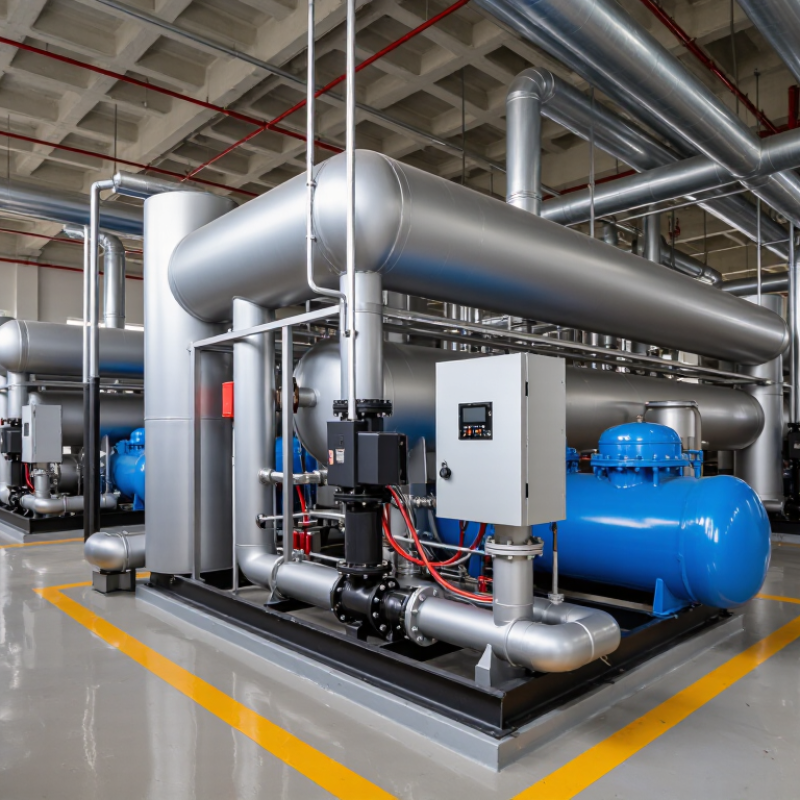
A water chiller machine removes heat from water or a process fluid. It then sends the cooled fluid through pipes to control temperature. The system uses a refrigeration cycle, similar to an air conditioner. Its main parts include a compressor, condenser, expansion valve, and evaporator. The evaporator absorbs heat from the circulating water. The condenser releases that heat into air or cooling water. A pump keeps the flow moving through equipment, storage tanks, or building coils.
The control panel maintains a selected temperature, often within a narrow operating range. However, real systems are less tidy than diagrams suggest. Poor airflow, dirty filters, incorrect flow rates, or oversized pumps can reduce performance. A cold outlet does not always mean efficient operation. Technicians should check inlet and outlet temperatures, pressure, current draw, and unusual vibration. These readings reveal problems earlier than a sudden shutdown. Water quality also matters. Scale can form inside heat-transfer surfaces and slowly weaken cooling capacity. That detail is easy to overlook.
Tips: Keep the condenser clean. Confirm adequate water flow before starting. Check for leaks weekly. Record operating readings, not just alarms. Allow the machine to stabilize before judging performance. A small logging habit can prevent expensive guesswork. Beginners may focus only on temperature, but energy use and pressure changes deserve equal attention.
How to Evaluate Water Chiller Manufacturers in 2026
Choosing a water chiller manufacturer requires more than comparing prices. The IEA’s The Future of Cooling reports that global cooling demand could more than triple by 2050. Efficiency must therefore guide your evaluation. Request certified COP and IPLV data under realistic operating conditions, not only laboratory best cases. AHRI 550/590 provides recognized testing methods for water-cooled and air-cooled chillers. Check whether the manufacturer follows comparable standards.
Evaluate performance at partial load, because many factories rarely operate at full capacity. Ask for compressor maps, leaving-water temperature ranges, noise levels, and annual energy estimates. Refrigerant selection also matters. UNEP’s 2023 Cooling Emissions and Policy Synthesis Report highlights the need for efficient equipment and lower-impact refrigerants. Review leak-control procedures and future regulatory risks. Service capability is equally important. Confirm spare-part availability, technician training, remote monitoring, and realistic response times. A polished brochure is not proof.
Tips: Ask for three operating references. Visit one if possible. Compare five-year energy costs, not only purchase prices. Require independent test certificates and written warranty terms. Inspect the control panel, pipe connections, and alarm history during a factory visit. Small details reveal manufacturing discipline. I would also score suppliers with the same checklist, although subjective judgments can still affect the result. That weakness should be recorded, not hidden.
Use these ten evidence-based criteria to compare water chiller manufacturers. The table is an evaluation framework, not a ranked list of named companies; actual performance and suitability depend on the specified operating conditions and local requirements.
| No. | Evaluation criterion | Suggested weight | What to verify | Evidence to request |
|---|---|---|---|---|
| 1 | Cooling capacity and operating envelope | 16% | Confirm the rated cooling capacity at your actual chilled-water supply and return temperatures, condenser conditions, and ambient temperature. Check whether capacity changes at peak summer conditions. | Selection sheet showing capacity, entering and leaving water temperatures, flow rate, ambient or condenser-water conditions, and stated tolerances. |
| 2 | Energy efficiency and rating conditions | 16% | Compare input power and efficiency at matching conditions. For applicable chillers, review full-load efficiency and part-load metrics such as IPLV or NPLV; these values are meaningful only when their rating conditions and calculation method are comparable. | Certified or independently verified performance data, test conditions, measurement method, and the complete part-load calculation basis. |
| 3 | Performance testing and certification | 12% | Check whether performance data is tested or certified under a standard relevant to the product and market. AHRI 550/590 is a widely used rating standard for applicable water-chilling and heat-pump water-heating packages. | Current certification or test documentation, model coverage, and confirmation that the quoted configuration matches the tested product. |
| 4 | Refrigerant and regulatory compliance | 10% | Verify the refrigerant type, safety classification, availability, and compliance with regulations in the installation location. Refrigerant rules vary by jurisdiction and can change over time. | Refrigerant specification, safety documentation, applicable declarations, and written confirmation of local-market compliance. |
| 5 | Reliability and component selection | 10% | Review compressor type, heat-exchanger materials, controls, protection functions, and the design’s suitability for expected operating hours, water quality, and load variation. | Technical bill of materials, operating limits, protection-function list, maintenance schedule, and references for comparable applications. |
| 6 | System integration and controls | 9% | Confirm compatibility with the plant’s pumps, cooling towers or dry coolers, building-management system, and control protocol. Clarify available alarms, communication points, and sequencing functions. | Control-point list, wiring diagrams, supported protocols, interface requirements, and commissioning scope. |
| 7 | Service network and spare-parts support | 9% | Assess the manufacturer’s service coverage near the site, technician capability, spare-parts availability, and the process for urgent troubleshooting. | Local service contacts, escalation procedure, spare-parts list, parts-support terms, and service response commitments in writing. |
| 8 | Warranty and lifecycle support | 7% | Compare warranty coverage, exclusions, start date, labor and travel provisions, and required maintenance conditions. Evaluate lifecycle support beyond the warranty period. | Full warranty terms, maintenance requirements, service-contract options, and documented process for warranty claims. |
| 9 | Manufacturing quality and traceability | 6% | Review documented quality controls, component traceability, pressure and leak testing, and inspection procedures. An ISO 9001 certificate relates to a quality-management system; it does not by itself certify chiller performance. | Quality-system certificate scope and validity, inspection and test records, and serial-number traceability process. |
| 10 | Total cost of ownership and delivery scope | 5% | Compare the complete installed and operating cost, not just the purchase price. Clarify included accessories, freight, installation responsibilities, commissioning, expected maintenance, and energy assumptions. | Itemized quotation, delivery and commissioning scope, exclusions, energy-use assumptions, and lifecycle-cost calculation. |
How to use the weights: Score each manufacturer against the same project requirements, then apply the suggested weights to support a consistent comparison. Treat weights as adjustable guidance, not an industry-wide ranking. Always compare performance data at equivalent conditions and confirm applicable standards and regulations for the installation market.
Top 10 Water Chiller Machine Manufacturers in 2026
The 2026 water chiller market rewards manufacturers that combine stable cooling, efficient controls, and dependable service. The top ten should include producers of air-cooled, water-cooled, modular, screw, scroll, centrifugal, and process chillers. Selection should not depend on advertising alone. Factory testing matters. So does field experience.
A reliable manufacturer publishes cooling capacity, leaving-water temperature, power input, and ambient limits. These details help engineers compare machines under similar conditions. Look for documented compressor protection, corrosion-resistant heat exchangers, and controllers that record alarms clearly. A strong supplier also provides installation drawings, maintenance schedules, spare-parts support, and technician training. Small details count.
Real projects reveal more than brochures. A chiller serving a food plant may face dust, washdown water, and changing loads. A hospital system needs quiet operation and careful redundancy. Energy performance should be checked at part load, not only during ideal testing. No ranking is perfect. I would recheck service response times and local parts availability before purchasing. Some manufacturers appear impressive online but offer limited support after delivery. Others have modest marketing but excellent commissioning records. Buyers should request reference sites, verified test reports, warranty terms, and lifecycle cost estimates before naming their preferred manufacturer.
In 2026, water chiller machine manufacturers will differ less by catalog size than by application knowledge. A factory cooling injection molds needs stable water flow, tight temperature control, and easy cleaning. A hospital or data center needs redundancy, low noise, and documented maintenance. The same machine cannot serve every site well. This is where practical experience matters. Engineers who measure return-water temperatures can size equipment more accurately than sellers using room averages. Small details matter.
Product ranges usually include air-cooled, water-cooled, scroll, screw, and modular systems. Air-cooled units simplify installation where cooling towers are impractical. Water-cooled designs may reduce operating costs, but they need treated water and regular condenser checks. Scroll systems suit smaller loads and frequent changes. Screw systems support larger, steadier demand. Modular chillers offer useful backup, although extra controls can complicate troubleshooting. A reliable manufacturer explains these trade-offs plainly, rather than promising maximum efficiency in every climate.
Application support also separates leading manufacturers. They should provide heat-load calculations, pump selection, controller settings, and service training. Ask for measured performance data at your expected ambient temperature, not only laboratory conditions. Check spare-part availability and response times before signing. I have seen projects fail because pipe sizing became an afterthought. One weakness remains common: published efficiency figures may omit pump energy. Buyers should question that gap. Good decisions come from verified site data, clear warranty terms, and designs technicians can maintain.
Choosing a water chiller manufacturer starts with the cooling load, not the brochure. In site audits, I have seen undersized units run continuously during humid afternoons. Oversized units often short-cycle, wasting energy and reducing comfort. The International Energy Agency’s 2018 The Future of Cooling report warned that cooling demand could more than triple by 2050. Efficiency is now a purchasing issue. Ask for full-load and part-load performance data under recognized testing conditions.
Request test results aligned with AHRI Standard 550/590 or an equivalent national standard. Compare integrated seasonal performance, not only peak COP. The U.S. Energy Information Administration’s 2018 Commercial Buildings Energy Consumption Survey reported that cooling represented about 9% of commercial building energy use. Exact figures vary by facility type. That uncertainty matters. A reliable manufacturer should disclose assumptions, correction factors, sound levels, refrigerant details, and control sequences. Ask for references from climates resembling your own.
Service capability deserves equal weight. Check local technicians, spare-parts availability, response times, commissioning records, and monitoring security. Price is not enough. Verify warranty exclusions in plain language. A factory tour helps, but it cannot replace independent test evidence. One weakness remains: published efficiency may not predict fouled condensers or unstable water quality. Include water-treatment guidance and maintenance intervals in the contract. Choose the manufacturer that explains limitations clearly, rather than promising impossible savings.
How to Choose the Right Water Chiller Manufacturer
Compare manufacturers against the operating conditions your project requires. These temperatures are illustrative design references, not universal specifications; confirm the final values for your application.