10 Water Chiller Buying Tips for Global Buyers?

Buying a water chiller is rarely a simple equipment decision. It affects energy use, production stability, maintenance, and long-term operating costs. The International Energy Agency reports that buildings consume about 30% of global final energy. Cooling demand may more than triple by 2050 without stronger efficiency measures.

The stakes are real.

The IEA’s The Future of Cooling highlights rising electricity demand from air-conditioning worldwide. Meanwhile, the U.S. Department of Energy emphasizes part-load efficiency, controls, and system integration. These findings matter because chillers rarely operate at full load all day. A unit that looks excellent on a laboratory datasheet may perform differently in a humid factory, coastal warehouse, or dusty plant room.

ASHRAE Fellow Steven T. Taylor, a respected HVAC system-design specialist, offers a useful warning: “A chiller is only as efficient as the system around it.” Buyers should therefore examine cooling capacity, energy efficiency ratios, refrigerant selection, water quality, controls, service access, and supplier experience together. One number cannot describe the whole machine.

This guide presents 10 water chiller buying tips for global buyers. It considers climate, voltage, standards, installation conditions, lifecycle cost, and after-sales support. Grand View Research and other market studies forecast continued growth in commercial and industrial cooling, but market forecasts are not guarantees. They can differ.

That uncertainty deserves attention.

A lower purchase price may conceal higher pumping costs, difficult spare-parts access, or weak technical support. No shortlist is perfect. Careful buyers still ask uncomfortable questions before signing, checking real operating data instead of trusting polished claims.
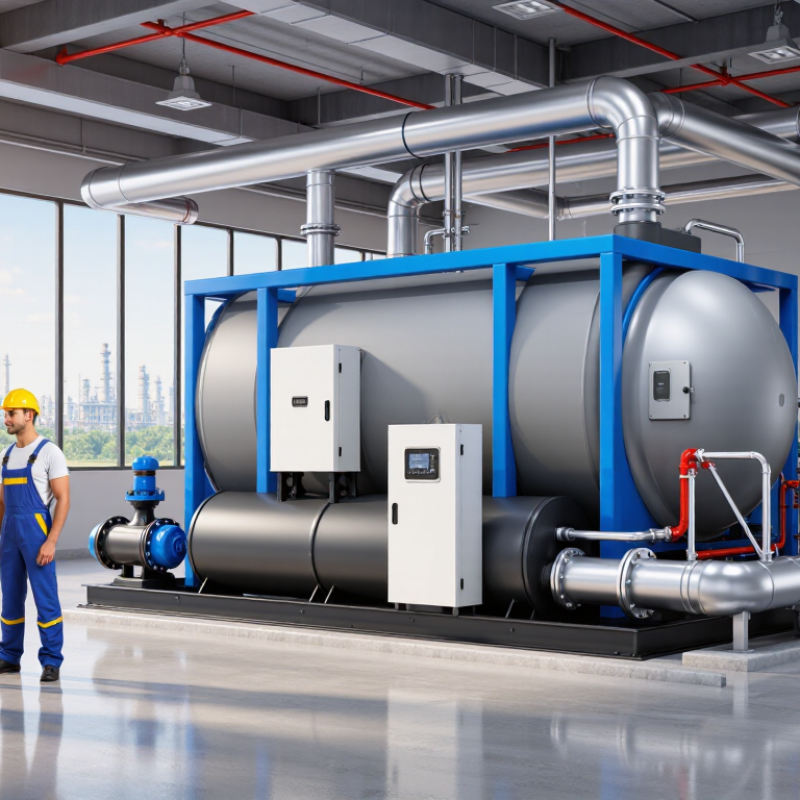
10 Water Chiller Buying Tips for Global Buyers?

Define Cooling Load: Convert Capacity with 1 RT = 3.517 kW and Add Design Margin

Before requesting quotations, define the chiller’s actual cooling load. Start with process heat, ambient conditions, fluid flow, and required leaving temperature. A machine rated at 100 RT provides about 351.7 kW of cooling, because 1 RT equals 3.517 kW. Do not confuse electrical input with cooling capacity. That mistake can distort energy estimates and installation planning. Ask the supplier to state capacity, entering and leaving temperatures, and the test conditions used.

For a practical estimate, include heat from pumps, fans, product lines, and nearby equipment. A process may need 280 kW, yet the connected load can rise during summer production. Convert it directly: 280 ÷ 3.517 equals about 79.6 RT. Then apply a design margin, often 10% to 20%, based on operating uncertainty and local climate. With a 15% margin, the target becomes roughly 322 kW, or 91.6 RT. Keep the calculation visible.

Oversizing is not automatically safer. It may cause short cycling, unstable temperatures, and unnecessary purchase costs. Undersizing is worse during peak heat. Field reviews often reveal failures caused by using winter data for hot-season selection. Recheck the load with measured flow and temperature readings whenever possible. If data is incomplete, say so in the specification rather than hiding the gap. Leave room for expansion only when production plans justify it. Ask for performance data at your actual water temperature and ambient range.
Compare COP, EER, and IPLV Under AHRI 550/590 Rating Conditions

When global buyers compare chillers, COP, EER, and IPLV must share identical rating conditions. AHRI 550/590 defines test procedures, water temperatures, flow rates, and load points for reliable comparison. COP expresses cooling output per kilowatt input. EER uses Btu per watt-hour, with 1 COP equal to 3.412 EER. Numbers need context. A higher value is not automatically a better purchase.

IPLV matters because chillers rarely operate at full load all day. Under the traditional AHRI weighting, 100%, 75%, 50%, and 25% loads represent 1%, 42%, 45%, and 12%. This weighting emphasizes seasonal part-load behavior. The International Energy Agency reports that cooling represents roughly 10% of global electricity consumption, according to The Future of Cooling. That figure makes small efficiency differences financially meaningful across large installations.

Request certified AHRI data before comparing quotations. Check entering and leaving water temperatures, condenser conditions, flow rates, and auxiliary power. Compare kW per ton too. A 0.60 COP difference may disappear when pumps and tower fans are excluded. Use NPLV when site conditions differ from standard rating points. I have seen buyers favor full-load COP, then discover weak performance during mild weather. That mistake is easy to make. Field conditions are less tidy than spreadsheets. A careful review should also test annual operating hours, local electricity tariffs, and control sequences against the published rating data. (AHRI 550/590-2023; IEA, The Future of Cooling, 2018)

10 Water Chiller Buying Tips for Global Buyers: Compare COP, EER, and IPLV Under AHRI 550/590 Rating Conditions

This reference comparison uses the AHRI 550/590 IPLV load weighting of 1% at 100% load, 42% at 75% load, 45% at 50% load, and 12% at 25% load. EER is shown in Btu/Wh, while COP is calculated as EER ÷ 3.412. The reference IPLV is approximately 20.3 EER, equivalent to 5.95 COP, using the AHRI weighted formula. Actual ratings depend on chilled-water temperature, condenser-water temperature, fouling factors, controls, and test conditions.

Match Flow and Temperature: Check ΔT, Pressure Drop, and L/min per kW

Match Flow and Temperature: Check ΔT, Pressure Drop, and L/min per kW

A water chiller’s flow rate should follow the actual heat load, not a convenient catalogue number. Measure entering and leaving water temperatures during realistic operation. Their difference is the ΔT.

For water, the estimated flow is about 14.3 divided by ΔT in °C, giving L/min per kW.
At a 5°C ΔT, one refrigeration kW needs roughly 2.9 L/min.

Small details matter.

A lower ΔT demands more flow, larger pipes, and a stronger pump. A higher ΔT reduces flow but may create uneven cooling at the process equipment. Glycol changes the calculation because it has different heat capacity and viscosity. Use its concentration and operating temperature, not a water-only formula.

Pressure drop deserves equal attention.

Add losses from the chiller, heat exchanger, valves, filters, flexible hoses, and the longest pipe run. Then compare the total resistance with the pump curve at the required L/min.

In field commissioning, I have seen acceptable chiller capacity paired with insufficient flow because the filter was overlooked. It was not a dramatic failure. The outlet temperature simply drifted upward.

Recheck ΔT after cleaning the circuit and opening control valves. A design can look correct on paper yet remain uncomfortable in operation.

Screen Refrigerants by GWP: Compare R-410A at 2,088 and R-32 at 675

When buying a water chiller, screen refrigerants by GWP before comparing price or cooling capacity. Under common 100-year assessments, R-410A is listed at 2,088, while R-32 is listed at 675. That difference can affect future compliance, reporting duties, and replacement planning. Values may change with updated standards, so verify the calculation basis and local requirements.

The lower GWP option is not automatically the better choice. R-32 has an A2L mild flammability classification, requiring suitable leak detection, ventilation, electrical controls, and technician training. R-410A is generally classified as A1, but its higher GWP may create greater long-term pressure from environmental rules. Ask suppliers for refrigerant charge, seasonal efficiency data, operating pressure, and safety documentation. Small details matter.

Check the entire system, not only the gas label. A poorly maintained chiller can waste energy and release refrigerant through loose fittings. Request service records, pressure-test procedures, recovery plans, and access to qualified maintenance support. Compare performance under your actual entering-water temperature and outdoor conditions. Laboratory data can look impressive.

I would also question a simple payback estimate. It may ignore training, tools, refrigerant availability, and end-of-life recovery. A clear technical file is often more valuable than a polished sales claim. Choose carefully.

10 Water Chiller Buying Tips for Global Buyers – Screen Refrigerants by GWP: Compare R-410A at 2,088 and R-32 at 675

A practical refrigerant-screening table for evaluating environmental impact, safety, efficiency, serviceability, and regulatory readiness.

Refrigerant Screening Matrix for Water Chiller Procurement
Buying Tip Evaluation Dimension R-410A R-32 R-454B R-134a R-290 Buyer Action
1. Compare GWP before selecting the refrigerant 100-year Global Warming Potential 2,088 675 466 1,430 3 Prefer the lowest-GWP option that satisfies capacity, safety, and local-code requirements.
2. Check ozone protection Ozone Depletion Potential 0 0 0 0 0 Confirm the refrigerant is non-ozone-depleting and that recovery procedures are documented.
3. Review refrigerant safety classification ASHRAE 34 safety class A1: lower toxicity, no flame propagation A2L: lower toxicity, mildly flammable A2L: lower toxicity, mildly flammable A1: lower toxicity, no flame propagation A3: lower toxicity, higher flammability Verify machinery-room ventilation, leak detection, charge limits, and electrical-area requirements.
4. Match the refrigerant to the chiller type Typical application fit Air-cooled and water-cooled comfort or process chillers Compact and medium-capacity systems designed for A2L use Low-GWP replacement platform for selected high-pressure systems Medium- and large-capacity systems, including process applications Suitable designs where hydrocarbon safety controls are acceptable Ask for the rated cooling capacity, leaving-water temperature, ambient range, and operating envelope.
5. Compare energy efficiency at real conditions Performance evidence required Request full-load and part-load COP or EER Request full-load and part-load COP or EER Request certified performance data for the selected design Evaluate efficiency at the intended water temperatures Evaluate efficiency together with charge and safety constraints Do not compare efficiency using nominal conditions alone; use the same entering and leaving water temperatures.
6. Verify pressure and component compatibility System pressure and materials High-pressure design required High-pressure design required High-pressure design required Moderate-pressure design, dependent on operating conditions Design pressure and component selection must follow the equipment standard Check heat exchangers, compressors, valves, pressure controls, and service tools for refrigerant compatibility.
7. Estimate lifecycle refrigerant impact Direct emissions exposure Higher impact per kilogram released About 68% lower GWP than R-410A About 78% lower GWP than R-410A Lower than R-410A, but still a higher-GWP HFC Very low direct climate impact when properly contained Consider refrigerant charge, expected service life, leak rate, recovery, and end-of-life reclamation.
8. Confirm local regulatory availability Market and phase-down risk Restrictions may increase in some markets Lower-GWP option, subject to A2L rules Lower-GWP option, subject to local approval Availability depends on regional HFC policies Low-GWP option, subject to flammable-refrigerant codes Check import rules, installation codes, HFC quotas, and future service availability in the destination country.
9. Assess technician and service readiness Tools, training, and spare parts Widely recognized service procedures Requires A2L-trained technicians and suitable recovery equipment Requires A2L-trained technicians and compatible tools Established service knowledge in many regions Requires hydrocarbon refrigerant training and ignition-control procedures Obtain a service plan, training requirements, leak-test method, and critical spare-parts list.
10. Request verifiable documentation Documents to collect before purchase Datasheet, charge, safety data, test conditions Datasheet, charge, A2L compliance, test conditions Datasheet, charge, A2L compliance, test conditions Datasheet, charge, recovery instructions, test conditions Datasheet, charge, flammable-refrigerant compliance, test conditions Require independently verifiable performance data and refrigerant documentation before issuing a purchase order.

Data note: GWP values are 100-year values commonly reported using the IPCC Fourth Assessment Report basis: R-410A 2,088, R-32 675, R-134a 1,430, R-454B 466, and R-290 3. Values and regulatory treatment can vary by standard, jurisdiction, and assessment methodology.

Always confirm the latest local safety codes, refrigerant restrictions, equipment certification requirements, and allowable charge limits before final selection.

Verify Compliance and Cost: CE, UL, ISO 9001, Energy, Service, and Warranty

When buying a water chiller internationally, compliance documents deserve more than a quick glance. CE marking should match the applicable European requirements and the exact chiller model. UL evidence may be necessary for North American projects, but its scope must cover the complete equipment, not only selected components. Check the scope. Ask for current certificates, test reports, and model numbers. I have seen documents that looked impressive but described an older configuration.

ISO 9001 confirms a manufacturer’s quality management system, not automatic product performance. Review inspection records, factory testing procedures, and traceability for compressors, pumps, and control panels. Energy claims also need careful verification. Request rated cooling capacity, input power, operating conditions, and test standards. A low energy figure may reflect ideal laboratory conditions. That matters. Compare realistic annual consumption instead of advertising percentages.

Service planning can prevent expensive downtime after installation. Confirm remote troubleshooting, spare-parts availability, technician response times, and local support arrangements. Put these details in writing. Warranty terms should state coverage periods, exclusions, labor responsibility, shipping costs, and required maintenance. Read the difficult clauses. Some warranties become weak when water quality, ambient temperature, or installation conditions fall outside narrow limits. I would also request references from comparable projects, although references alone cannot replace technical verification. A careful buyer leaves room for doubt and checks the details twice.