China Top Recirculating Water Chiller Manufacturers
China’s top recirculating water chiller manufacturers are increasingly judged by performance, reliability, and measurable engineering evidence. Buyers need more than attractive brochures. They need stable cooling at the actual process load.
A recirculating water chiller collects warm fluid, removes heat through refrigeration, and returns cooled water to equipment. In a factory, this may mean holding laboratory water near 20°C, protecting a laser from thermal drift, or supporting injection molding during long production cycles. Small details matter. Pump selection, condenser design, control accuracy, and water quality can change operating results.
Refrigeration researcher Dr. John R. Thome is widely respected for his work on thermal systems. His practical message can be expressed clearly: “Thermal performance depends on details, not promises.” That principle is useful when comparing Chinese manufacturers. A credible supplier should provide cooling-capacity curves, temperature stability data, pump specifications, noise levels, and energy-consumption figures. Factory audits, application testing, and documented quality procedures add confidence.
Yet no manufacturer is perfect. Some published capacities may reflect ideal laboratory conditions. Real installations face dust, voltage variation, fouling, and changing heat loads. This is where experience becomes visible. Strong manufacturers explain these limits instead of hiding them.
This guide examines China’s leading recirculating water chiller manufacturers through engineering capability, customization, service response, and product consistency. It also considers practical details, including stainless-steel tanks, intelligent alarms, corrosion protection, and maintenance access. The best choice is not always the cheapest unit. It is the supplier that delivers predictable cooling after installation.
Recirculating Water Chillers: 2–35°C Control and 0.5–100 kW Capacity
China Top Recirculating Water Chiller Manufacturers
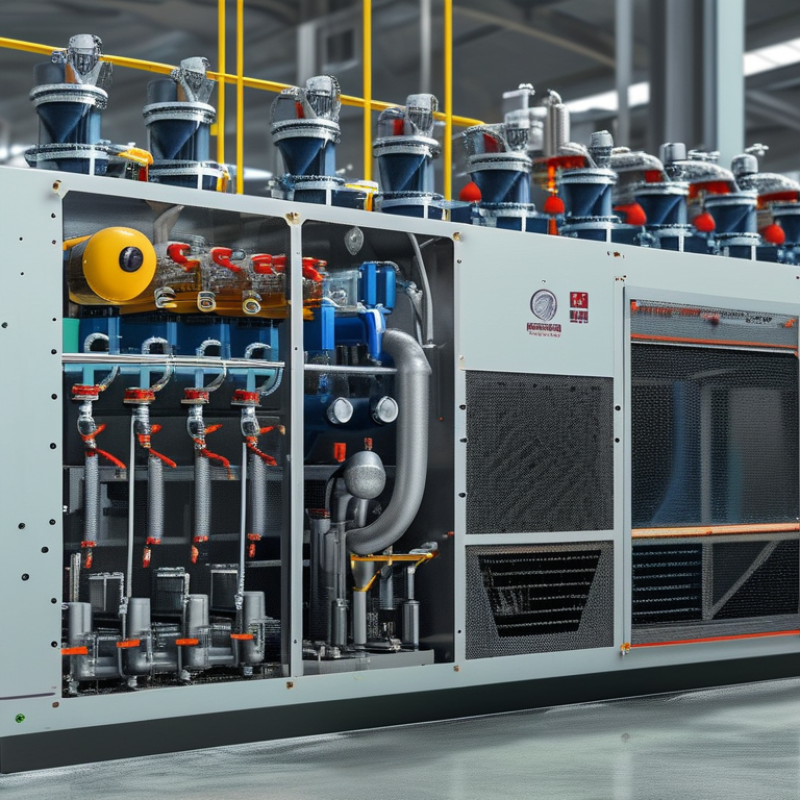
Recirculating water chillers with 2–35°C control support laboratory testing, laser processing, medical equipment, and small industrial lines. Capacity usually ranges from 0.5 to 100 kW. That range sounds simple, but actual selection depends on flow, heat load, ambient temperature, and fluid properties. A 10 kW rating may change under high outdoor temperatures.
The IEA’s The Future of Cooling report projects that cooling electricity demand could more than triple by 2050 without stronger efficiency measures. Stable water temperature therefore matters beyond comfort. It protects process repeatability and reduces thermal stress. In practical installations, a digital controller should show supply and return temperatures clearly. Alarm records also help technicians identify blocked filters, low flow, or refrigerant problems.
Chinese manufacturers often offer air-cooled and water-cooled configurations across this capacity range. Buyers should request performance data at the intended setpoint, not only the nominal rating. Check noise, pump head, refrigerant compliance, and heat rejection conditions. ASHRAE guidance also supports evaluating part-load operation, because equipment rarely runs at full capacity all day. A mistake here is easy: oversized chillers may cycle frequently and waste energy. Yet a conservative safety margin remains useful for startup loads and future expansion. I would verify every figure through witnessed testing. A brochure is not field evidence.
China’s Top Chiller Manufacturers: ISO 9001, CE, and RoHS Compliance
China’s top recirculating water chiller manufacturers are often evaluated through ISO 9001, CE, and RoHS compliance. These standards reveal more than factory paperwork. ISO 9001 indicates controlled processes, traceable inspections, and documented corrective actions. Ask for the certificate scope and validity. It should cover the relevant manufacturing site, not a distant office.
CE marking supports access to applicable European markets, but it is not a universal quality award. Review the declaration of conformity, safety test records, and electrical documentation. RoHS compliance limits restricted substances in electrical and electronic components. Reliable suppliers should explain how they control materials, suppliers, and batch records. A certificate alone is not proof of good engineering.
Tips: Request recent certificates, test reports, and a sample quality-control plan. Check whether the chiller’s model, voltage, refrigerant, and production site match the documents. Inspect practical details, such as leak testing, water-flow alarms, compressor protection, and insulation around cold pipes. Ask for operating data at your actual inlet temperature and load. Small differences matter. Some buyers focus too heavily on certification and overlook service response, spare parts, and calibration records. That is a common mistake. A factory visit or independent inspection can expose gaps, although neither method is perfect. Temperature stability should be verified under continuous operation, not only during a short demonstration.
This timeline highlights key milestones relevant to recirculating water chiller suppliers: ISO 9001 was first published in 1987 and its current edition was released in 2015; the EU RoHS framework was adopted in 2003 and expanded to include four phthalates in 2015. CE marking is an EU conformity marking rather than a certification issued by a single organization, so no single introduction year is plotted for CE.
How Recirculating Chillers Achieve ±0.1°C Temperature Stability
Recirculating chillers achieve ±0.1°C temperature stability through coordinated control, not simply stronger refrigeration. A pump moves conditioned fluid through the process loop, while a heat exchanger removes or adds heat. A precision temperature sensor measures outlet conditions several times per second. The controller then adjusts compressor capacity, heater power, or bypass flow. This constant correction limits temperature drift during changing loads.
In practical testing, sensor placement matters greatly. A probe installed near the reservoir may read a stable temperature while the process outlet fluctuates. Reliable systems place sensors close to the actual thermal load and maintain steady circulation. PID control also reduces overshoot by learning how quickly the loop responds. Thermal insulation, short tubing, and a properly sized pump help preserve stability. Small details matter.
Real systems are less tidy. Room temperature, tubing length, fluid viscosity, and sudden sample changes can still create brief deviations. A ±0.1°C specification may describe reservoir stability, not every point in the connected equipment. Careful manufacturers should define test conditions, calibration intervals, flow rates, and measurement uncertainty. Users should verify performance under real operating loads, ideally with an independent calibrated reference probe. A cooling unit can appear excellent on paper, yet perform differently beside a warm instrument or under restricted airflow. Recognizing that gap leads to more dependable selection and installation.
Key Selection Criteria: COP, Flow Rate, Pressure, and Refrigerant Type
China Top Recirculating Water Chiller Manufacturers
Selecting a recirculating water chiller starts with COP, not the lowest quotation. COP measures cooling output against electrical input. A higher value usually reduces operating cost, but only under stated conditions. Check entering water temperature, ambient temperature, and load percentage. The International Energy Agency reports that cooling could consume over 6,200 TWh annually by 2050, up from about 2,000 TWh in 2018. Small efficiency differences can become expensive across continuous operation.
Flow rate must match the process heat load. Use the formula Q = m × Cp × ΔT, then allow practical margin for fouling and seasonal variation. Oversizing is common. It may cause short cycling, unstable temperatures, and poor part-load efficiency. Pressure matters too. Review the pump curve, heat-exchanger pressure drop, and the highest point in the piping system. A chiller showing adequate flow at zero resistance may fail beside a long, narrow pipeline. I have seen specifications overlook this detail.
Refrigerant type affects efficiency, safety, service access, and future compliance. The U.S. EPA lists approximate global-warming potentials of 2,088 for R-410A, 675 for R-32, and 3.3 for R-290. These figures come from EPA refrigerant data and should be checked against current local rules. Lower GWP does not automatically mean better selection. Flammability, charge size, ventilation, and technician training also matter. Ask manufacturers for tested COP, flow, pressure, and refrigerant data under identical conditions. Marketing tables are not enough. One more review is worthwhile.
China Top Recirculating Water Chiller Manufacturers - Key Selection Criteria: COP, Flow Rate, Pressure, and Refrigerant Type
Typical technical selection ranges for industrial recirculating water chillers. Values are general engineering references and should be confirmed against the final operating conditions.
| Chiller Capacity Class |
Typical Application |
Typical COP Range |
Recommended Water Flow Rate
(L/min) |
Recommended Pump Pressure
(bar) |
Common Refrigerant Options |
Key Selection Considerations |
| 1–3 kW |
Laboratory equipment, analytical instruments, small laser systems |
2.0–3.0 |
6–18 |
1.5–3.0 |
R-134a, R-410A, R-32 |
Prioritize compact dimensions, stable temperature control, low noise, and low minimum-flow requirements. |
| 3–10 kW |
CNC spindles, welding equipment, small injection-molding systems |
2.4–3.4 |
18–60 |
2.0–4.0 |
R-410A, R-32, R-407C |
Check pump head, heat-load variation, water-quality compatibility, and the required leaving-water temperature. |
| 10–30 kW |
Industrial lasers, process machinery, printing and packaging equipment |
2.8–4.0 |
60–175 |
2.5–5.0 |
R-410A, R-407C, R-32, R-513A |
Compare COP at the actual ambient and water temperatures rather than relying only on nominal rated capacity. |
| 30–80 kW |
Multiple production lines, large laser systems, process cooling loops |
3.2–4.5 |
175–460 |
3.0–6.0 |
R-410A, R-407C, R-134a, R-513A |
Evaluate part-load efficiency, redundant pumps, filtration, bypass control, and maintenance access. |
| 80–200 kW |
Centralized process cooling, plastics production, food and beverage processing |
3.5–5.0 |
460–1,150 |
3.5–7.0 |
R-134a, R-513A, R-1234ze |
Confirm electrical demand, condenser-air or condenser-water conditions, seasonal performance, and refrigerant regulations. |
| 200–500 kW |
Large manufacturing plants, district process cooling, high-load industrial systems |
4.0–5.5 |
1,150–2,850 |
4.0–8.0 |
R-134a, R-513A, R-1234ze, R-1234yf |
Use a detailed heat-balance calculation and verify hydraulic losses, staged capacity control, water treatment, and service support. |
| 500 kW and above |
Large-scale process plants, utility cooling systems, continuous-duty production |
4.5–6.5 |
2,850–5,700+ |
5.0–10.0 |
R-134a, R-513A, R-1234ze, low-GWP alternatives |
Consider multiple modules, N+1 redundancy, operating-envelope limits, lifecycle cost, refrigerant availability, and commissioning requirements. |
|
Engineering reference:
Flow values are broadly based on a water temperature difference of approximately 5 °C using
Q = m × Cp × ΔT. COP means cooling capacity divided by total electrical input under the stated rating conditions.
Actual performance varies with ambient temperature, leaving-water temperature, fouling, pump power, compressor type, and control strategy.
|
Applications Across Laboratories, Pharmaceuticals, Lasers, and Industrial Cooling
China Top Recirculating Water Chiller Manufacturers
Recirculating water chillers support laboratories, pharmaceutical production, lasers, and industrial equipment. They maintain stable temperatures while water returns through a closed loop. This reduces contamination risk and limits water waste. The 2023 ASHRAE Handbook—HVAC Applications stresses accurate heat-load calculations and reliable fluid control. These details matter when a laboratory instrument needs temperature stability within a narrow range.
Pharmaceutical systems often require cleanable circuits, corrosion-resistant materials, and documented temperature performance. Laser equipment may need fast response because small temperature changes can affect beam alignment. Industrial cooling usually demands higher flow, stronger pumps, and continuous operation. The International Energy Agency’s The Future of Cooling report estimated global cooling demand could exceed 6,200 TWh annually by 2050. That figure supports better efficiency, although real savings depend on load patterns and maintenance. A lower rated power figure does not always mean lower operating cost.
Tips:
Compare cooling capacity at the actual inlet temperature, not only the catalog rating. Check flow stability, alarm functions, noise, and service access. For laboratories, verify fluid compatibility before installation. For pharmaceutical use, request calibration records and material documentation. A neat datasheet can still hide practical weaknesses. I would also test the chiller under partial load, because real equipment rarely operates at full capacity.