
Why Choose a Small Water Chiller for Your Business?
A small water chiller can make process cooling easier to manage without taking over valuable floor space. For a café, laboratory, packaging line, or compact workshop, that difference matters. Picture a chiller tucked beside a production bench, circulating cooled water to equipment that needs steady temperatures. The right unit may help limit temperature swings, simplify installation, and keep cooling close to the point of use. But “small” does not automatically mean suitable.
Capacity, water-flow requirements, operating temperature, and room conditions all deserve careful attention. A unit that looks compact on a product page may struggle during a hot afternoon or a busy production shift. Check the heat load, confirm the required inlet and outlet temperatures, and ask how maintenance access will work in the actual space. Small details count.
There is one sourcing point worth being clear about: without a provided article or verifiable reference, I can’t responsibly attribute a quotation to a named industry expert. A useful engineering principle is: “Choose the chiller for the real heat load, not the footprint alone.” Treat that as an editorial takeaway, not a sourced quotation. It captures the central question behind choosing a small water chiller: can it deliver dependable cooling under your business’s real operating conditions? A careful comparison can reveal trade-offs in noise, energy use, controls, and service access. Some needs may still be uncertain; measuring the load over a typical workday is a sensible place to begin.
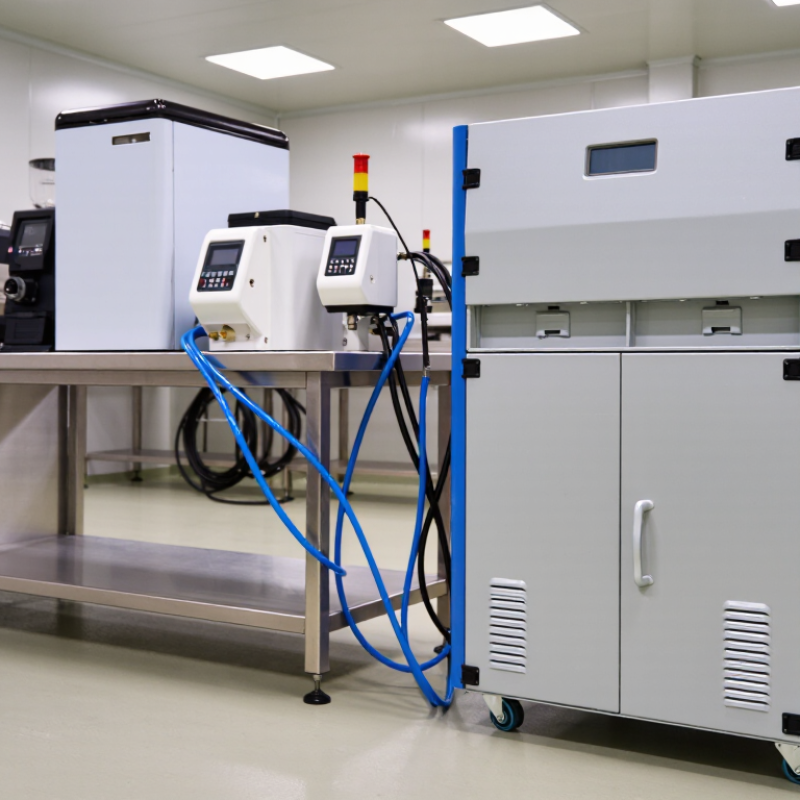
What a Small Water Chiller Is and How It Works
A small water chiller is a compact cooling unit that removes heat from circulating water. A pump sends the cooled water through hoses or pipes to equipment that needs temperature control. The water absorbs heat there, then returns to the chiller. The loop stays closed. This arrangement can serve laser cutters, laboratory instruments, or small production machines without relying on room air alone.
Inside the chiller, warm return water passes through an evaporator, where refrigerant absorbs its heat. A compressor raises the refrigerant’s pressure and temperature. The condenser then releases that heat into the surrounding air or a separate water circuit. After cooling and changing pressure, the refrigerant cycles back to the evaporator. A thermostat monitors water temperature and signals the system when cooling is needed.
“Small” describes the unit’s size and cooling capacity, not a universal fit. Check the equipment’s heat output, required water flow, inlet temperature, and room conditions before choosing one. A unit that works well on a cool morning may struggle in a hot, poorly ventilated workshop. Sizing takes care. Even so, the figures can be imperfect: real heat loads often vary during a work shift. Regularly checking filters, hoses, and water flow helps reveal problems before temperatures drift.
Why Choose a Small Water Chiller for Your Business? - What a Small Water Chiller Is and How It Works
| Dimension | What It Means | Typical Information or Example | Why It Matters to a Business |
|---|---|---|---|
| Definition | A small water chiller is a compact refrigeration system that removes heat from a circulating liquid, usually water or a water-glycol mixture. | “Small” has no single industry-wide capacity threshold; the term commonly describes compact units serving individual machines, work areas, or modest process loads. | Helps businesses provide localized cooling without installing a large central chiller system. |
| Main components | A typical vapor-compression chiller contains an evaporator, compressor, condenser, expansion device, pump, and controls. | The evaporator cools the process liquid; the compressor circulates refrigerant; the condenser rejects heat to air or water. | Understanding the components makes it easier to plan installation, routine maintenance, and troubleshooting. |
| How cooling works | The refrigerant absorbs heat from the circulating liquid in the evaporator, then releases that heat through the condenser. | The cooled liquid returns to the equipment or process, while the refrigerant repeats its cycle. | A stable supply of chilled liquid can help control process temperatures and reduce overheating interruptions. |
| Heat rejection | Air-cooled units reject heat to the surrounding air; water-cooled units transfer heat to a separate cooling-water system. | Air-cooled models generally avoid cooling-tower water requirements, but need adequate airflow and clearance around the condenser. | The choice affects installation space, utility use, ventilation needs, and maintenance planning. |
| Cooling capacity | Capacity describes how much heat the chiller can remove per unit of time. | Cooling capacity is commonly stated in kilowatts (kW) or refrigeration tons. One refrigeration ton equals approximately 3.517 kW. | Sizing should be based on the actual heat load and operating conditions, not solely on the physical size of the chiller. |
| Liquid flow rate | Flow rate is the volume of chilled liquid circulated through the equipment each minute or hour. | For water, a 1-ton load at a 10°F (about 5.6°C) temperature rise requires approximately 2.4 US gallons per minute, subject to system conditions. | Correct flow supports heat transfer and helps prevent poor cooling or evaporator problems. |
| Temperature control | Controls monitor liquid temperature and adjust chiller operation to maintain a target setpoint. | Achievable setpoints depend on the unit design, refrigerant, liquid type, ambient conditions, and application. | Stable temperature can improve product consistency and protect temperature-sensitive equipment. |
| Typical business uses | Small chillers are used where a localized, controlled supply of cooling liquid is needed. | Examples include cooling laboratory instruments, laser equipment, small manufacturing processes, and commercial beverage or food equipment. | A dedicated unit can match cooling more closely to a specific process or machine. |
| Potential business benefits | Compact installation, localized temperature control, and cooling capacity suited to a smaller load. | Actual energy use and operating cost depend on capacity, efficiency, load profile, ambient temperature, and maintenance. | May be a practical alternative when a central system is unnecessary or when a process needs independent cooling. |
| Selection checks | Review heat load, required liquid temperature, flow and pressure, room conditions, electrical supply, and heat-rejection method. | Also confirm liquid compatibility, available space, noise limits, service access, and any need for glycol or filtration. | Checking these requirements helps avoid undersizing, compatibility issues, and installation delays. |
Note: Values are general engineering references. Confirm required capacity, flow, temperature range, and electrical specifications with a qualified chiller supplier or engineer for the specific application.
Related Posts
-
Why Is My Small Water Chiller Not Cooling?
-
10 Water Chiller Buying Tips for Global Buyers?
-
2025 Top 10 Small Water Chillers for Efficient Cooling Solutions
-
Why You Should Invest in a Water Chiller System for Your Business?
-
China Top Recirculating Water Chiller Manufacturers
-
Top 10 Benefits of Using Water Chillers in Industrial Applications?